5 Ways to Save Money When Building a New Deck
Building a new deck represents a significant investment in your Jacksonville home, creating valuable outdoor living space while boosting property value and curb appeal. However, deck costs can quickly escalate from reasonable to overwhelming if you’re not strategic about material choices, timing, and design decisions. The good news? Smart homeowners can save thousands on their deck project without sacrificing quality, durability, or aesthetic appeal.
Whether you’re working with a tight budget or simply want to maximize value from your deck investment, understanding where to save, and where to splurge, makes the difference between a deck that drains your wallet and one that delivers exceptional value for years to come. Jacksonville’s climate demands durable materials and proper construction, but that doesn’t mean you can’t find cost-effective approaches that meet these requirements while staying within budget.
Stop Dreaming.
Start Building Today!
Let’s explore five proven strategies for reducing deck costs without compromising on the quality and performance your Florida home deserves. From material selection and timing to design optimization and financing options, these approaches help you build the deck you want at a price you can afford.
1. Choose Cost-Effective Materials That Perform Well in Florida
Material selection represents the single biggest factor affecting your deck’s cost, but expensive doesn’t always mean better, and budget-friendly doesn’t necessarily mean low quality. The key is understanding which materials deliver the best performance-to-price ratio for Jacksonville’s demanding climate.
Pressure-Treated Wood: The Budget-Friendly Foundation
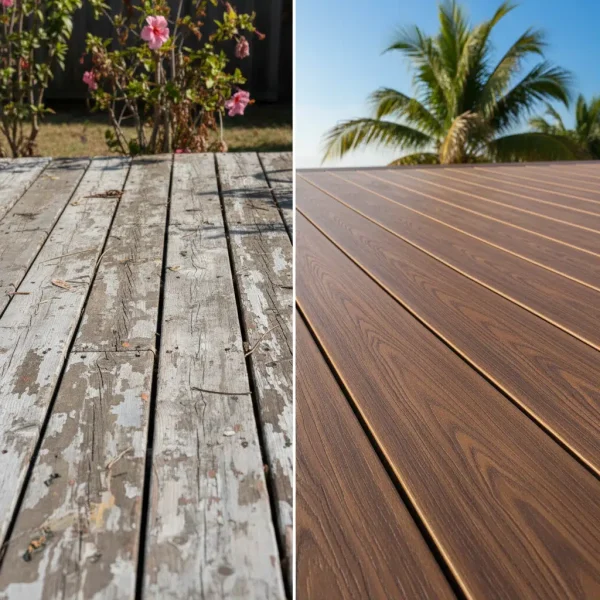
Pressure-treated wood decks remain the most affordable decking option, with material costs typically 30-50% less than composite alternatives. Modern pressure-treated lumber uses copper-based preservatives that resist rot and insects while being safe for outdoor living spaces. For homeowners on strict budgets, pressure-treated wood provides a functional, attractive deck that can last 15-20 years with proper maintenance.
The trade-off with pressure-treated wood is ongoing maintenance requirements. You’ll need to seal or stain your deck every 2-3 years to prevent weathering and extend its lifespan. This maintenance costs $300-$600 for DIY approaches or $600-$1,200 for professional application. Over a 15-year period, these recurring costs add up, but the lower initial investment still makes pressure-treated wood the most budget-friendly choice for cost-conscious homeowners.
To maximize value with pressure-treated decking:
- Choose lumber graded for ground contact even for above-ground applications (better rot resistance)
- Select straight, knot-free boards for highly visible deck surfaces
- Use treated lumber strategically for structural elements while considering composite for visible deck boards
- Apply high-quality sealant immediately after installation to lock in natural color and provide maximum protection
At Coastal Outdoor Construction, we build beautiful pressure-treated wood decks that maximize this affordable material’s potential. Our veteran craftsmen know how to select quality lumber, build proper support structures that prevent future problems, and apply finishing treatments that extend your deck’s life and beauty.
Strategic Composite Material Use
While full composite decks cost significantly more than pressure-treated wood upfront, strategic composite use creates middle-ground options that balance cost and performance. Consider these hybrid approaches:
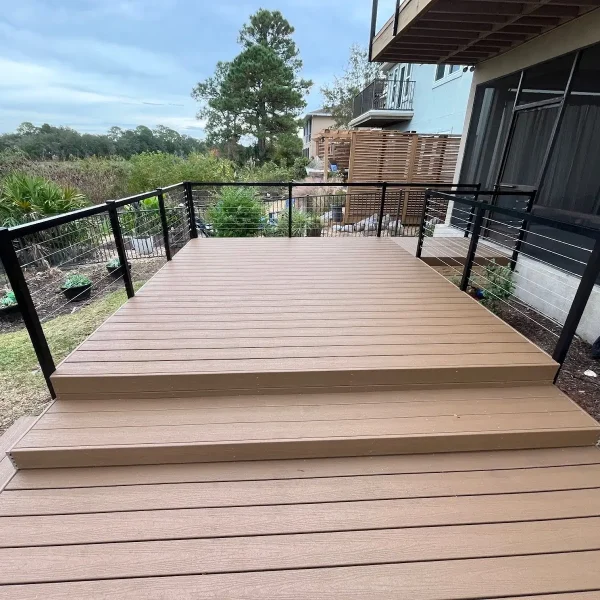
Composite Deck Boards with Treated Structure: Use composite materials for visible deck surfaces where you walk and entertain, while building the structural frame (joists, beams, posts) from pressure-treated lumber. This approach delivers composite’s low-maintenance benefits and superior appearance where it matters most, while economizing on hidden structural elements. Savings can reach $2,000-$5,000 compared to all-composite construction.
Composite on High-Traffic Areas Only: For multi-level decks or large projects, use composite decking on primary living areas (dining, seating) while utilizing pressure-treated wood for stairs, lower levels, or less-used sections. This targeted approach provides low-maintenance performance where you spend most time while reducing total project cost.
Select Budget Composite Lines: Major manufacturers like Trex, TimberTech, and MoistureShield offer multiple product tiers at different price points. Their entry-level composite lines cost 20-30% less than premium options while still delivering good performance and appearance. These budget-friendly composites significantly outperform pressure-treated wood in maintenance requirements and longevity, making them smart value choices.
The key to composite savings is being strategic about where you use these premium materials rather than defaulting to all-composite or all-wood approaches. During your free consultation with Coastal Outdoor Construction, we discuss these hybrid options and help you design a deck that optimizes materials for your priorities and budget.
Railing Material Considerations
Railing represents 15-25% of total deck costs, making it another area where strategic material choices create savings without compromising safety or appearance.
Pressure-Treated Wood Railing: The most economical option at $15-25 per linear foot installed. Wood railings require the same maintenance as wood decking, regular sealing or staining, but offer traditional appearance that complements wood or composite decks. For budget-conscious projects, simple square or turned balusters with clean lines deliver attractive results without premium pricing.
Aluminum Railing: Initially more expensive at $40-70 per linear foot, aluminum railing never needs painting or staining, resists rust and corrosion, and maintains appearance for decades with minimal care. For decks using composite or premium wood, aluminum railing provides maintenance-free performance that makes economic sense over time.
Composite Railing Systems: Falling between wood and aluminum at $30-55 per linear foot, composite railing coordinates perfectly with composite decking while requiring no maintenance. Most manufacturers offer railing lines that match their decking collections, creating cohesive designs.
Cable Railing: Premium pricing at $60-100+ per linear foot, but creates unobstructed views perfect for decks overlooking water or scenic areas. The modern aesthetic appeals to homeowners seeking contemporary designs.
For maximum value, consider mixing railing materials, aluminum or composite for most visible front sections with pressure-treated wood for less prominent sides or rear sections. This approach saves money while maintaining attractive appearance where it matters most.
2. Optimize Your Deck Size and Design for Efficiency
Bigger isn’t always better when it comes to deck construction. Thoughtful sizing and design optimization create functional outdoor spaces without unnecessary expense.
Right-Size Your Deck for Actual Use
Many homeowners overbuild, creating decks larger than their lifestyle actually requires. Before finalizing plans, carefully consider how you’ll use your outdoor space:
Dining-Focused Decks: A 12×16 deck (192 square feet) comfortably accommodates a table for 8-10 people plus circulation space. Expanding to 16×20 adds 128 square feet and $3,000-$6,000 in costs but may not increase functionality if you rarely entertain large groups.
Seating and Relaxation: A 10×12 or 12×12 deck provides ample space for outdoor furniture, creating intimate spaces perfect for family relaxation without excessive costs.
Multi-Functional Spaces: If you want both dining and seating areas, consider a 12×20 or 14×18 deck that defines zones without unnecessary expansion. Strategic furniture placement creates distinct areas within efficient footprints.
For many Jacksonville homeowners, decks in the 200-300 square foot range provide excellent functionality at reasonable costs. Each additional 50 square feet adds $1,500-$3,000 to your project, money better spent on quality materials or features that enhance enjoyment rather than rarely-used square footage.
Simplify Your Design
Complex deck shapes with angles, curves, and multiple levels look impressive but dramatically increase costs through:
- Additional materials and waste from cutting
- Increased labor hours for complex framing
- More challenging railing installations
- Additional structural engineering requirements
A simple rectangular or square deck costs 20-40% less than equivalent-sized complex designs while often providing more usable space. Straight lines create clean, classic aesthetics that age well and accommodate furniture more efficiently than complex shapes with tight corners or awkward angles.
If visual interest is important, consider these budget-friendly design enhancements:
Picture-Frame Borders: Running deck boards in one direction with perpendicular border boards creates visual definition at minimal additional cost, typically $300-$800 depending on size.
Diagonal Deck Boards: Installing boards at 45-degree angles adds visual interest for small additional cost ($400-$1,000 extra labor) compared to dramatic multi-level or curved designs.
Built-In Planters or Benches: Incorporating simple built-in elements adds character without complex structural changes. A built-in planter box costs $200-$500 while built-in benches run $400-$800, far less than adding deck levels or complex shapes.
Accent Colors or Materials: Using contrasting deck board colors for borders or accent strips creates visual interest through material choices rather than complex construction.
Consider Attached vs. Freestanding Options
Attaching your deck to your home typically costs less than freestanding construction by eliminating the need for one complete side of structural support. However, proper attachment requires careful flashing and waterproofing to prevent moisture damage to your home’s siding and structure.
Freestanding decks offer placement flexibility and avoid any risk to your home’s exterior, but require full four-sided structural support that increases material and foundation costs. For projects situated away from your house, perhaps surrounding a pool deck or creating a destination seating area in your yard, freestanding construction is necessary. But when practical, attached decks provide cost savings while creating convenient access from your home’s interior.
At Coastal Outdoor Construction, we properly flash and waterproof all ledger board attachments, ensuring your home’s exterior remains protected while your deck benefits from cost-effective attached construction.
Multi-Level vs. Single-Level Decisions
Multi-level decks create visual interest and accommodate sloped sites, but each level change adds significant cost:
- Additional structural framing and support
- More complex railing requirements
- Increased material waste from cutting and fitting
- Extra labor hours for level transitions
For level lots, single-plane decks cost 15-30% less than multi-level designs while providing equivalent usable space. If your site has significant slope, a single raised deck built to accommodate the grade may still cost less than creating multiple levels to follow terrain.
When slope necessitates level changes, consider limiting to one or two steps rather than creating three or four distinct levels. Each transition point increases costs while potentially fragmenting your deck into smaller, less functional zones.
3. Time Your Project Strategically
When you build your deck significantly impacts both costs and contractor availability. Smart timing creates savings while ensuring quality results.
Off-Season Construction Advantages
Jacksonville’s deck building season peaks in spring (March-May) as homeowners prepare for summer entertaining. This high demand period means:
- Longer wait times for project starts
- Less negotiating flexibility on pricing
- Contractors juggling multiple concurrent projects
- Potential weather delays during summer rainy season (June-September)
Building during fall and winter (November-February) offers several advantages:
Better Pricing Opportunities: Lower demand often translates to better pricing or willingness to negotiate on larger projects. While Coastal Outdoor Construction maintains consistent pricing year-round, we currently offer $250 off new deck installations, combining this with off-season timing maximizes savings.
Faster Project Starts: Less busy schedules mean shorter waits between estimate and construction start, getting your deck completed sooner.
More Focused Attention: Crews working fewer concurrent projects can dedicate more time and attention to your deck, often resulting in better communication and slightly faster completion.
Comfortable Working Conditions: Jacksonville’s mild winters make fall and winter ideal for construction work, comfortable temperatures for crews often translate to more efficient installation compared to sweltering summer heat.
The main consideration with winter construction is occasional cold snaps that can delay concrete curing for footings. However, these delays are typically minor and outweighed by the benefits of off-season building.
Material Price Fluctuations
Lumber prices fluctuate based on supply and demand cycles, though these variations are less dramatic than the extreme swings seen during the pandemic-era shortages. While you can’t perfectly time the lumber market, being flexible about project timing allows you to proceed when prices are reasonable rather than being forced to build when costs are elevated.
Composite material pricing remains more stable throughout the year, making it less subject to timing concerns. However, manufacturers occasionally run promotions or introduce new product lines that create buying opportunities, your contractor can alert you to these opportunities if you’re planning ahead.
Planning for Peak Enjoyment
Consider timing your deck completion for when you’ll get maximum enjoyment. Building in fall or winter means your deck is ready for spring and summer use, Jacksonville’s best outdoor living months. This approach also allows landscaping to establish around your new deck before summer heat stresses new plantings.
Conversely, starting construction in late spring or summer means your deck may not be ready until fall, potentially missing the peak outdoor season. Planning ahead and building during slower months ensures your deck is complete and ready when you want to use it most.
4. Handle Some Tasks Yourself (Strategically)
Complete DIY deck building isn’t realistic for most homeowners, structural elements require expertise that prevents costly mistakes and ensures code compliance. However, strategic DIY involvement in appropriate tasks creates meaningful savings without compromising quality.
Tasks Suitable for DIY Participation
Site Clearing and Preparation: Removing old deck structures, clearing vegetation, and leveling areas around your project site saves $500-$1,500 in labor costs. Most homeowners can handle this work with basic tools and a rental dumpster.
Debris Removal: While Coastal Outdoor Construction includes free removal of old decks and patios, handling ongoing construction debris removal yourself can reduce costs for projects where our promotion doesn’t apply. Renting a dumpster runs $300-$600 depending on size, less than professional hauling services charge.
Finishing Work: Applying sealant or stain to completed wood decks represents straightforward work suitable for DIY completion, saving $400-$800 compared to professional application. Quality results require proper products, good weather conditions, and careful attention to coverage, but nothing that demands specialized skills.
Landscaping Integration: Adding plantings, mulch, or landscaping elements around your completed deck provides DIY opportunities that personalize your space while saving professional landscaping costs.
Simple Accessory Installation: Mounting house numbers, hanging planters, or installing solar deck lights represents easy DIY work that adds personal touches without requiring professional assistance.
Tasks Best Left to Professionals
Some aspects of deck construction demand professional expertise:
Structural Design and Engineering: Proper deck design ensures adequate support for loads, appropriate spacing for joists and beams, and structural integrity that withstands Jacksonville’s wind loads and weather. Professional design prevents expensive failures and ensures code compliance.
Foundation and Footings: Properly sized and placed concrete footings prevent settling, shifting, and structural problems. This critical work requires expertise about soil conditions, frost lines (minimal in Jacksonville but still considered), and proper concrete mixing and placement.
Structural Framing: The deck’s skeleton must be precisely level, square, and properly fastened to provide stable support for decking materials. Mistakes here compromise everything built on top and may require complete reconstruction to correct.
Ledger Board Attachment: Connecting your deck to your home requires proper flashing, waterproofing, and structural fastening techniques that prevent moisture damage and ensure safe attachment. This represents one of the most critical, and risky, aspects of deck construction.
Electrical Work: Any lighting, outlet, or fan installation requires licensed electrical contractors for safety and code compliance. Attempting DIY electrical work creates safety hazards and potential insurance issues.
Railing Installation: While seemingly straightforward, proper railing installation must meet precise code requirements for spacing, height, and strength. Professional installation ensures safety and passes inspections.
For Jacksonville homeowners, professional deck construction provides the best value when you consider expertise, efficiency, insurance, and warranty coverage. Our experienced teams at Coastal Outdoor Construction complete in days what might take DIY builders weeks, with results that meet or exceed all building codes and manufacturer specifications.
The “Sweat Equity” Approach
Some homeowners successfully reduce costs by working alongside professional crews on appropriate tasks, holding boards during installation, helping with measurements, fetching tools or materials. This “helper” approach requires contractors comfortable with client participation and realistic understanding that you’re not a trained crew member.
If this interests you, discuss it during initial consultations. Some contractors welcome engaged clients while others prefer working independently. At Coastal Outdoor Construction, we’re happy to discuss participation options that create savings while ensuring quality results.
Ready to Start Your Budget-Friendly Deck Project?
Don’t let budget concerns prevent you from creating the outdoor living space your Jacksonville home deserves. With strategic planning, smart material choices, and the right contractor partnership, you can build a beautiful, durable deck that fits your financial parameters without compromise.
Contact Coastal Outdoor Construction today for your free consultation and estimate. We’ll discuss your vision, assess your site, and provide detailed pricing that includes all costs, no surprises. We’ll also explore opportunities to maximize value through material selection, design optimization, and our current promotions.
Call (904) 664-6364 to speak with our team about your deck project. Take advantage of our $250 off promotion on new deck installations and our free old deck removal offer. Ask about our flexible financing options that make your dream deck affordable with manageable monthly payments.
Visit our gallery to see completed deck projects in various styles, sizes, and materials, or explore our blog for additional deck planning guidance and inspiration. From budget-friendly pressure-treated wood decks to premium composite designs, we build outdoor spaces that exceed expectations while respecting your investment.
Your perfect deck is more affordable than you think, let’s start planning it today. With smart strategies and experienced partners, you’ll soon be enjoying a beautiful new deck that enhances your home’s value and your family’s lifestyle without breaking your budget.
For more information on deck options and planning, explore these helpful resources:
- Composite vs. Wood Deck Comparison – Detailed analysis of material costs and performance
- How Much Does a Deck Cost in Jacksonville – Comprehensive cost breakdown for local projects
- Deck Installation Services – Overview of our deck building services and approach
- About Coastal Outdoor Construction – Learn about our experience and commitment to quality
- Customer Testimonials – See what Jacksonville homeowners say about working with us
Your dream deck awaits, affordable, beautiful, and built to last in Jacksonville’s demanding climate. Let’s make it happen together.
Frequently Asked Questions
Pressure-treated wood remains the most affordable option, with material costs typically 30-50% lower than composite alternatives. While it requires more long-term maintenance like staining and sealing to withstand Jacksonville’s humidity, it provides a functional and attractive deck at the lowest initial price point.
You can save significantly by using a hybrid approach—building the hidden structural frame out of affordable pressure-treated lumber while using composite boards only for the visible surfaces. Additionally, choosing an entry-level “budget” composite line from major brands can reduce material costs by 20-30% compared to premium tiers.
Yes, simple rectangular or square designs are much more cost-effective because they minimize material waste and require fewer labor hours for complex framing. Decks with curves, multiple levels, or complicated angles can increase labor and material costs by as much as 20-40% compared to a straightforward layout.
Building during the off-season (November through February) can lead to savings because contractor demand is lower, often resulting in more flexible pricing and faster project starts. Since Jacksonville winters are mild, construction can proceed efficiently without the sweltering heat or daily summer rain delays that often slow down projects.
Handling the demolition and site preparation yourself can save you anywhere from $500 to $1,500 in labor costs. Clearing away vegetation and disposing of old debris allows the professional crew to start building immediately, though many local contractors may offer free removal as part of a current project promotion.

Written By:
Coastal Outdoor Construction
Let's Talk About Your Decking Project
After we get some information from you, we’ll set up a time to discuss your project in further detail.