The toughest choice for many Jacksonville homeowners? Deciding between cedar’s timeless beauty and composite’s hurricane-ready durability. Both materials promise a backyard escape, but Florida’s climate has a way of testing every board you install.
This guide breaks down how cedar and composite decking really perform in Jacksonville. We’ll look at durability, cost, maintenance, appearance, and long-term value so you can choose the material that keeps your deck looking good and standing strong, through sunny weekends and storm season alike.
Stop Dreaming.
Start Building Today!
Talk to a Jacksonville decking expert for free on the best material for your project.
Why Decking Material Choice Matters in Jacksonville
Building a deck in Jacksonville isn’t like building one in a mild, dry climate. Here, your outdoor space is constantly exposed to salty coastal air, pounding summer rains, scorching sun, and the occasional hurricane. That combination can warp boards, invite termites, and shorten the lifespan of even the best-looking deck.
That’s why the material you choose matters. Cedar has a reputation for natural charm, while composite is designed to withstand harsh conditions. In Jacksonville, looks matter, building a deck that can keep up with your lifestyle and survive the weather year after year is more important.
Cedar Decking Overview
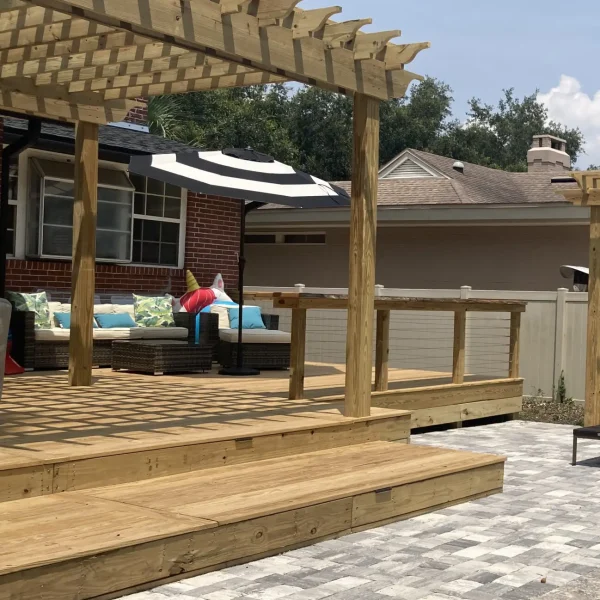
Cedar decking is loved for its natural charm. It has rich tones, a pleasant fragrance, and a grain that makes every board feel unique. For many homeowners, cedar is the classic choice when they picture a backyard deck.
But looks only tell part of the story. Modern cedar isn’t as tough as the old-growth cedar found in older homes. It is softer than hardwoods, scratches easily, and can break down quickly in wet or humid climates like Jacksonville. If it’s a must, homeowners must prepare to handle more maintenance time than a composite deck owner can imagine.
Pros of Cedar Decking
Warm, natural appearance that weathers into a rustic silver if left untreated
Eco-friendly and biodegradable compared to plastics
Easier to cut and install than hardwoods like ipe or mahogany
Less expensive than composite upfront
Cons of Cedar Decking
Requires annual sealing or staining to resist water damage
Soft surface scratches and dents easily from furniture or pets
Vulnerable to termites, rot, and warping in Florida’s humidity
Shorter lifespan—often 10 to 15 years before boards need replacing
When comparing cedar decking vs composite decking in Jacksonville, cedar wins on natural beauty but loses when it comes to resilience. If you want low maintenance and storm resistance, composite usually comes out ahead.
Composite Decking Overview
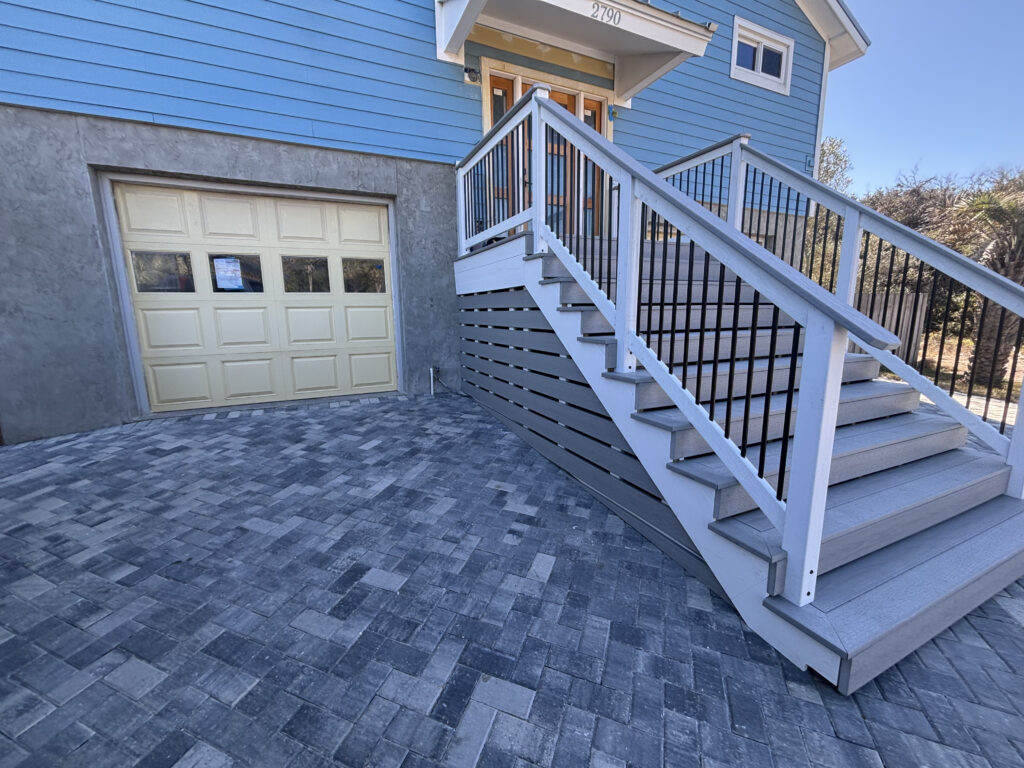
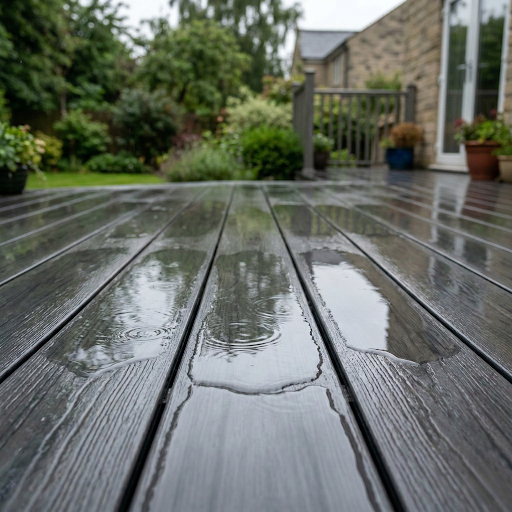
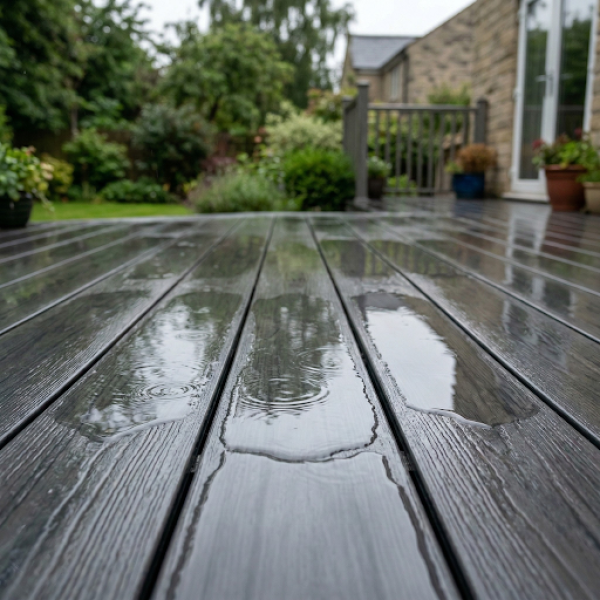
Composite decking is built for homeowners who want the look of wood without the endless upkeep. Made from a mix of recycled wood fibers and plastic, capped composite boards are designed to resist the very problems that shorten the life of cedar decking in Jacksonville.
Pros of Composite Decking
Low maintenance: No annual staining or sealing. A quick wash with soap and water is usually all it needs.
Durability: Resists rot, termites, splintering, and warping even in Florida’s humidity. Many composite decks last 25 to 50 years.
Consistency: Boards are uniform with no knots or imperfections, unlike natural cedar.
Storm resilience: Heavier and more stable than cedar, making it less likely to lift or twist during hurricane season.
Style options: Modern composites mimic the grain and texture of wood, with a variety of colors that stay consistent over time.
Cons of Composite Decking
Higher upfront cost: Typically more expensive than cedar decking to install.
Heat absorption: Darker composites can feel hot underfoot in the Jacksonville sun. Choosing lighter colors or heat-resistant brands can reduce this issue.
Scratches: Can scratch from heavy furniture or grills, and unlike cedar, surface damage cannot be sanded out.
Installation demands: Heavier boards require stronger framing and correct joist spacing to avoid bounce.
When you compare cedar decking vs composite decking, the trade-off is clear: cedar offers upfront savings and natural beauty, while composite delivers durability and ease of ownership in a climate that punishes wood.
Cedar Decking vs Composite Decking: A Factor-by-Factor Comparison
Choosing between cedar decking and composite decking in Jacksonville isn’t just a matter of taste. The two materials behave very differently when exposed to Florida’s humidity, heat, and storm season. To make the right decision, it helps to weigh them across the factors that matter most to homeowners: durability, maintenance, cost, appearance, and climate performance.
Durability
Durability is where the two materials part ways most clearly. Cedar is a softwood, which means it is naturally more vulnerable to dents, scratches, and weathering. Even with regular sealing, cedar tends to last 10 to 15 years in Jacksonville before major repairs are needed.
Composite decking, by contrast, is manufactured to resist rot, insects, and warping. When properly installed on hurricane-rated framing, composites from brands like Trex and MoistureShield can last 25 to 50 years. For a homeowner planning to stay in their house long-term, composite offers far more staying power.
Maintenance
Cedar decking requires commitment. To keep it from absorbing too much moisture or fading in the Florida sun, it must be cleaned, sealed, or stained almost every year. Miss a season, and you’ll likely see splitting, warping, or signs of termite activity. Composite, however, eliminates most of this effort. A light wash with soap and water is usually enough to keep boards looking new. That difference translates into more weekends enjoying the deck and fewer spent working on it.
Cost of Initial Construction
On the surface, cedar seems like the budget-friendly option. Installed, cedar decking usually runs between $15 and $25 per square foot. Composite falls higher, typically $25 to $45 per square foot, depending on the brand and style. But the financial story doesn’t end with the first invoice. Cedar’s ongoing maintenance, combined with its shorter lifespan, often makes it more expensive in the long run. Composite demands more up front, yet over the decades, it typically proves to be the more economical choice for Jacksonville homeowners who value low upkeep and longevity.
Appearance
Cedar decking has an undeniable charm. Its warm tones, distinctive grain, and natural fragrance give a deck character that no manufactured board can fully replicate. Left untreated, cedar develops a gray patina that some homeowners find rustic and appealing. Composite has evolved rapidly, though. High-end lines mimic wood grain with surprising accuracy, and unlike cedar, the color you select remains stable over time. In Jacksonville, where UV exposure and humidity accelerate weathering, a composite deck’s ability to hold its appearance can outweigh cedar’s natural beauty.
Climate Performance
Jacksonville’s climate is punishing. Between humid summers, termite pressure, and hurricane winds, decks are tested year after year. Cedar can handle dry, cooler environments with grace, but in Florida, it requires constant vigilance to keep it from failing early. Composite is designed with these challenges in mind. Its stability under heat, resistance to water absorption, and heavier weight make it more reliable when storms pass through. For coastal homeowners, that resilience often tips the scales.
Cedar vs Composite: The Bottom Line for Jacksonville Homes
Cedar decking is prized for its natural beauty, but in Jacksonville’s climate, it demands yearly upkeep and typically lasts only 10 to 15 years. Composite decking costs more up front, yet with a 25 to 50 year lifespan, minimal maintenance, and stronger resistance to storms, it is often the smarter long-term investment for Florida homeowners.
Get your free deck estimate with Coastal Outdoor Construction today
Frequently Asked Questions About Cedar vs Composite Decking
In Florida’s humidity, cedar decking usually lasts 10 to 15 years with proper care. It requires annual sealing or staining and regular inspections for termites and rot. If you prefer the look of cedar but want a longer-lasting solution, Coastal Outdoor Construction often designs hybrid decks—using cedar for accents and composite for the main walking surface.
Yes. Composite is denser and more stable than cedar, making it less likely to warp or lift in high winds. Jacksonville Deck Builders uses hurricane-rated framing and brands like Trex and MoistureShield, which are proven to perform in coastal conditions and come with warranties of up to 50 years.
Cedar wins on authenticity because it is real wood. Composite has caught up, though—high-end lines like Trex Transcend® and MoistureShield Vision® are designed to mimic the look of natural cedar while maintaining color and finish for decades. Our team shows clients full samples so they can compare in person before making a choice.
Cedar decking costs less up front, but it comes with higher yearly maintenance and a shorter lifespan. Composite decking is more expensive initially but lasts 25 to 50 years with minimal upkeep. At Coastal Outdoor Construction, we provide side-by-side cost breakdowns so homeowners can see the real difference in lifetime value.
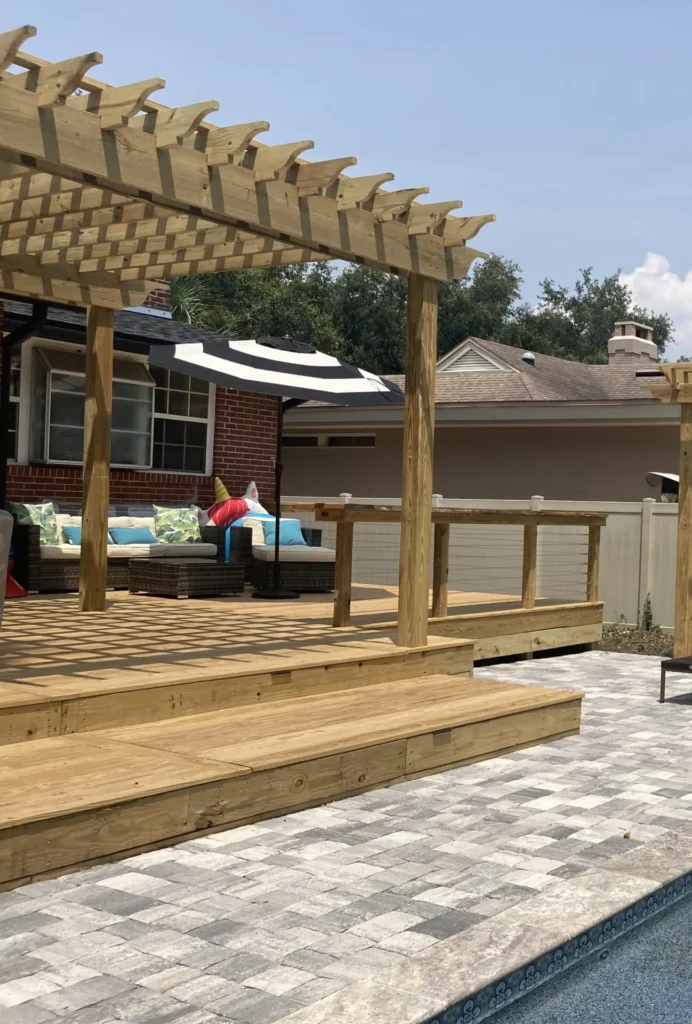
Yes, with the right planning. Some Jacksonville homeowners choose cedar for pergolas, pavilions, or railings while using composite for the main deck. Our builders specialize in these mixed-material projects, ensuring that fasteners, drainage, and warranties remain intact.

Written By:
Coastal Outdoor Construction
Let's Talk About Your Decking Project
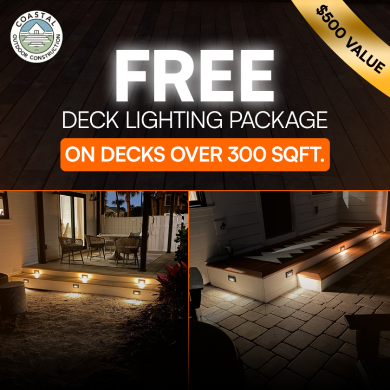
Enter your details below to lock in your $500 lighting credit.