If your commercial concrete surface is cracking, scaling, or showing wear early on, the problem likely began before the concrete ever hardened. It’s more common in Florida, with the coastal environment playing a part, but mostly how the handyman handled prepping and pouring ruins concrete slabs.
Here’s the thing: Florida’s heat, humidity, and shallow water table expose weak installation practices fast. When the wrong mix is used, or the subgrade isn’t compacted properly, or the slab isn’t cured with the environment in mind, concrete projects are doomed to fail.
At Coastal Outdoor Construction, we avoid blaming materials. As arguably the best Jacksonville commercial concrete installer, we believe your project will be a success if you learn why good concrete fails in bad conditions and how to prevent it.
If you’re managing or building commercial space in Florida, this guide will show you where most slabs go wrong and what should be done differently to get it right.
Common Causes Of Early Concrete Failure In Florida
If you’re managing commercial property in Florida, chances are you’ve seen concrete slabs fail well before they should. These failures are usually the result of avoidable mistakes during design and installation. Florida’s environment only makes those mistakes more visible, more quickly.
Poor Subbase Preparation And Lack Of Moisture Control.
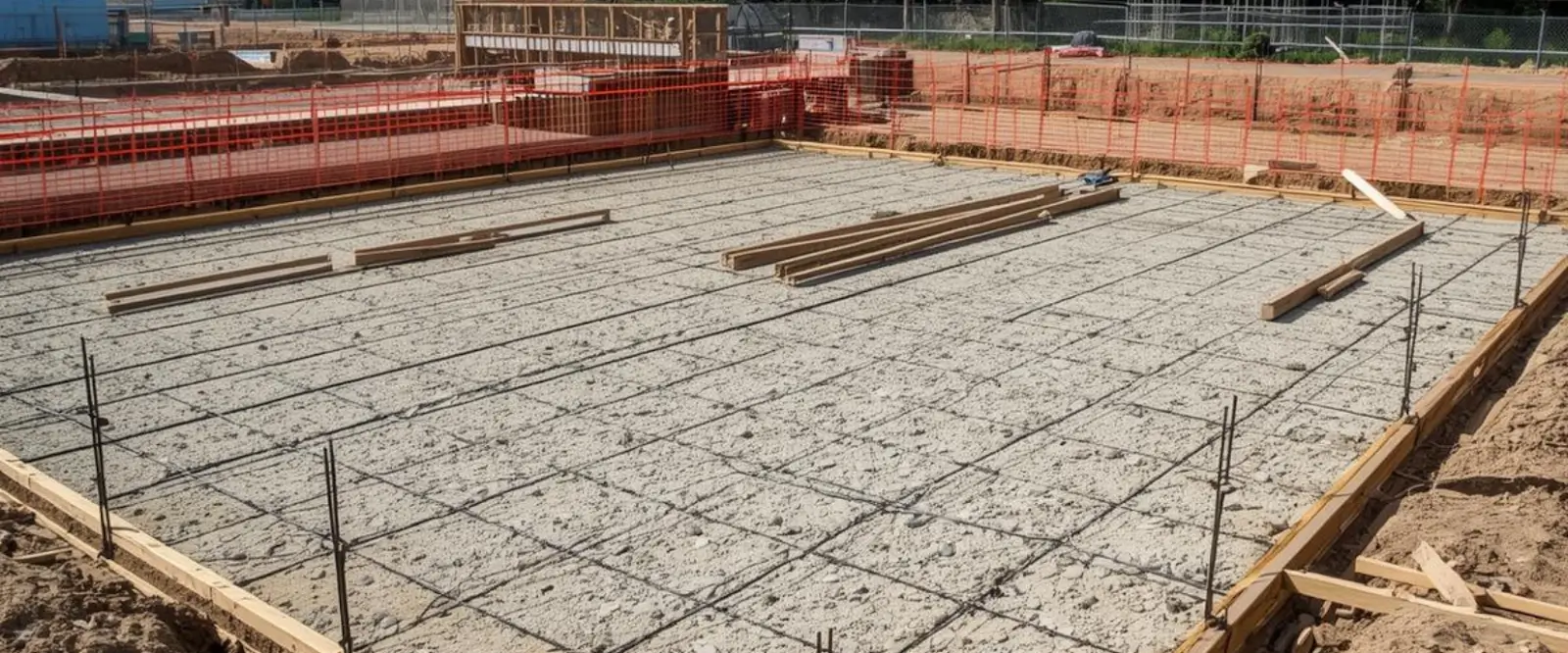
Florida’s high water table and sandy soil structure make it essential to compact the subgrade correctly and include a vapor barrier. Without that, groundwater can migrate through the concrete slab from below (a process called capillary rise), causing delamination, scaling, or internal moisture-related failure over time.
High Ambient Temperatures During Pour
Florida’s heat increases concrete’s set rate and shortens the finishing window. If the contractor doesn’t adjust the mix or shift the pour time, surface hydration suffers. Crusting and shrinkage cracks often form before the concrete reaches initial set, especially in direct sunlight or midday conditions.
Overwatering During Placement
It’s still common for crews to add water on-site to make the mix easier to handle, but this disrupts the water-cement ratio. As that ratio increases, strength and durability decrease, which makes the slab far more susceptible to cracking and wear under load, traffic, or repeated surface exposure.
Lack Of Proper Control Joints
Without well-placed and properly cut control joints, concrete slabs can’t relieve internal pressure during curing or thermal movement. When joints are too far apart or cut too late, cracks appear unpredictably, and in high-traffic areas, those cracks can become structural points of failure.
Incorrect Mix For Load And Exposure
A concrete mix designed for residential driveways is not suitable for commercial slabs in Florida. If the mix lacks sufficient PSI, proper admixtures, or chemical resistance, it won’t stand up to frequent vehicle loads, surface water exposure, or the region’s aggressive wet-dry cycles.
Why Florida Requires Tighter Tolerances In Mix And Placement
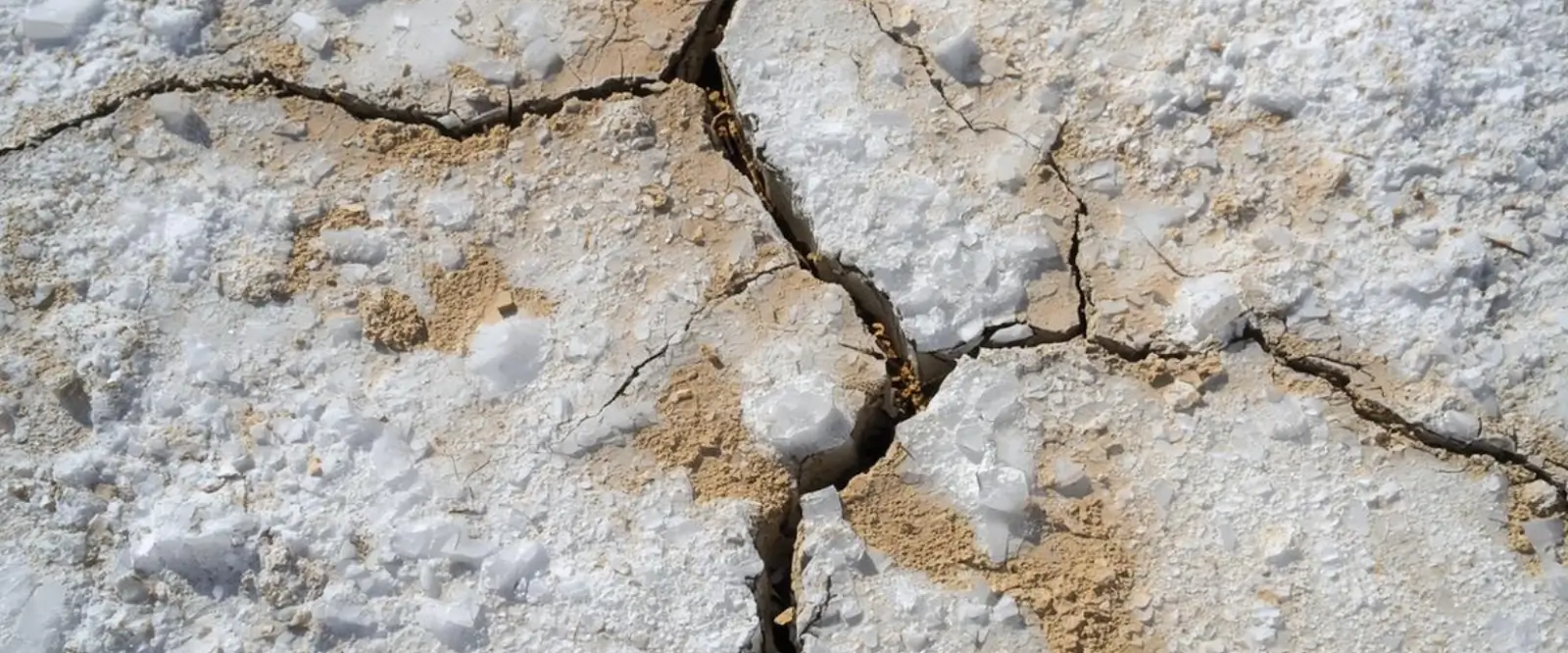
The truth is, Florida is an unforgiving environment for concrete. The state’s temperature, humidity, salty air from the coasts, and groundwater profile leave almost no room for construction shortcuts, especially on commercial projects where load demands are higher and slab exposure is constant.
High heat accelerates hydration. That means concrete placed during midday can begin setting faster than anticipated, which reduces workability and finish quality. If the placement crew doesn’t use retarders or an adjusted schedule to account for heat during setting, surface strength and long-term durability both suffer.
Also, humidity complicates curing. While moisture in the air can slow evaporation, it also creates unpredictable conditions during finishing, especially when paired with pop-up storms or full sun exposure. If the slab’s surface sets before internal moisture stabilizes, surface tension builds and leads to map cracking or scaling.
Florida rainfall adds further risk. Sudden weather shifts during or after placement can interrupt the curing cycle, and without proper protection, such as curing compounds or cover systems, early surface deterioration is hard to avoid.
This is why generic installation plans don’t hold up here. A contractor needs to actively manage mix selection, placement timing, and environmental exposure in real time. Otherwise, you end up with a slab that looked fine at the pour but begins to break down before it reaches full strength.
Site Preparation Is Foundational
A strong mix can’t compensate for a weak foundation. If the ground beneath your slab isn’t properly graded, compacted, and protected, concrete failure is only a matter of time, especially in Florida, where ground conditions change quickly after rain.
Grading controls water flow around and beneath the slab. When the slope is inconsistent or flat, water settles below the surface, softening the subbase and causing slab movement over time.
Even well-reinforced concrete can shift, crack, or sink if the base becomes unstable.
Subbase compaction is another step often rushed or overlooked. In Florida’s sandy soils, loose or uneven compaction allows differential settling. When this occurs, stress builds in isolated zones of the slab, leading to random cracking or load-bearing failure.
Moisture barriers are critical and often skipped. Without one, water vapor from the ground migrates into the concrete over time. This increases the risk of internal corrosion, reduces adhesion for surface finishes, and accelerates surface breakdown in high-traffic areas.
Cure Timing And Protection Are Often Ignored
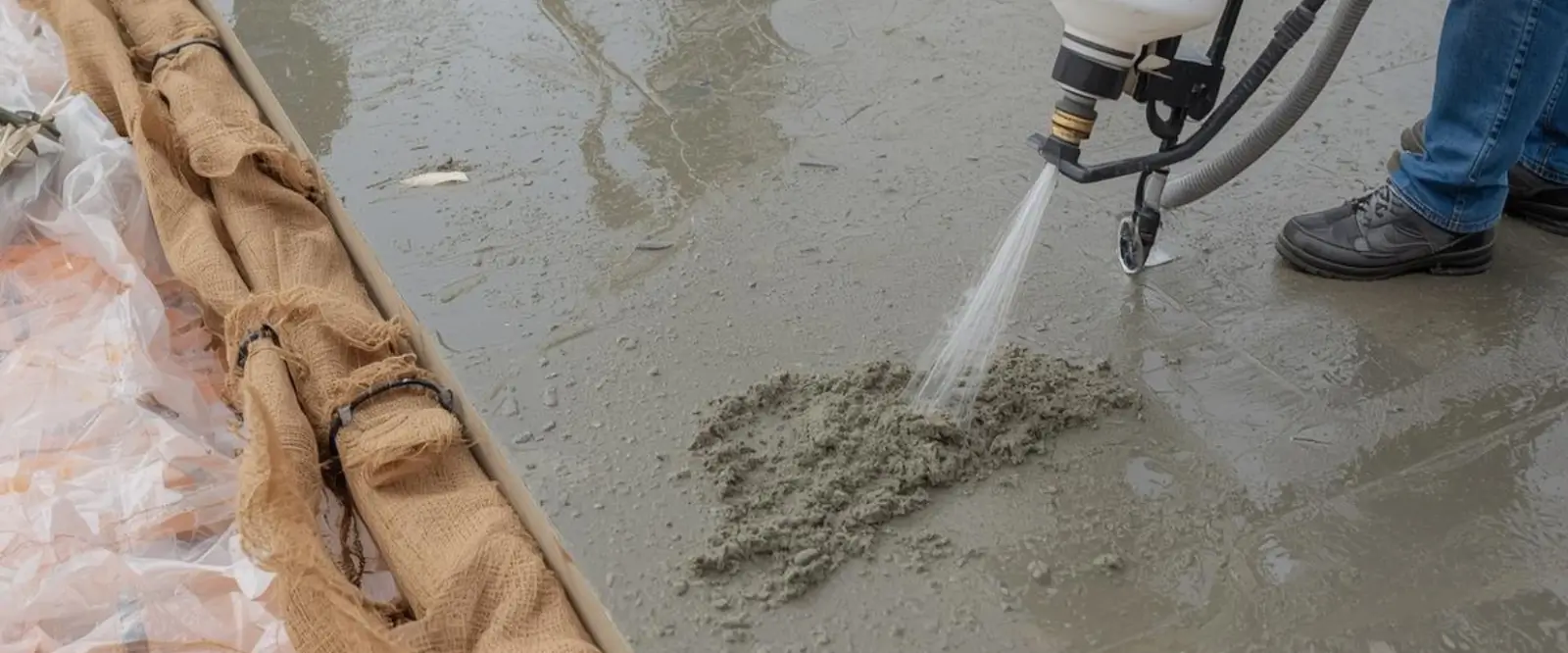
Curing is where most early concrete failures begin. In Florida, where heat and rainfall can shift hourly, curing requires close attention to timing and site conditions.
If the slab surface dries too fast, internal moisture can’t stabilize. That causes shrinkage cracks, surface tension, and reduced abrasion resistance. Most of this damage happens before the concrete reaches full strength, even if the mix was correct.
Contractors sometimes skip curing compounds or apply them too late. Without proper moisture retention, surface hydration stops early and weakens the cement matrix, especially at the top layer, where durability matters most.
Alternatively, rain during curing poses another risk. Light rain can disrupt curing compound films, and heavy rain may wash uncured cement paste from the surface. Slabs placed without a contingency plan for weather usually show surface defects within weeks.
Choosing A Contractor Who Builds For Florida Conditions
Specifying the right mix and preparing the site won’t prevent failure if your contractor is oblivious to the effects of Florida’s environment on field performance. Most premature slab problems begin with poor decisions made during placement, not just during design.
A qualified commercial contractor should coordinate mix designs with suppliers, verify reinforcement placement, and adapt pouring schedules to daily weather conditions. These aren’t optional steps in Florida. They’re necessary to keep the slab within tolerance from day one.
You should expect to see a control joint plan, a curing strategy, and documentation on how they’ll manage set times. If these aren’t discussed before the pour, they likely won’t be addressed on-site.
Contractors who work mainly on residential projects often use the same methods for commercial jobs. That gap in experience leads to issues like early cracking, subgrade failure, and uneven wear, which are avoidable with the right oversight.
Ensure Your Next Slab Lasts
Preventing early slab failure doesn’t require new materials, but better planning and control. Most failures traced back to mix design or site prep were avoidable at the specification stage.
Start by reviewing the mix submittal. If a quote doesn’t reflect site-specific demands like traffic load, surface exposure, or expected moisture, ask for modifications before approving it. For most Florida commercial sites, compressive strength alone is not a sufficient benchmark.
Walk the subbase before the pour. Poor grading, soft zones, or missing vapor barriers are clear signs of risk.
If these issues aren’t addressed beforehand, they’ll translate directly into performance problems within the first few years.
Make sure your contractor adjusts for temperature and weather.
Ask how they’ll manage set time, what curing method they’ll use, and how joint placement will be verified.
These are basic quality controls, but most are missed unless you raise them before the pour.
Final Thoughts
As we’ve established throughout this piece, most commercial concrete installations fail because of uncontrolled variables during design, prep, or placement.
In Florida, those variables multiply quickly. Heat shortens set times. Moisture moves through the subbase. Poor site control guarantees structural compromise.
If you’re responsible for concrete performance on a Florida commercial site, your focus should be on execution, not just specifications.
The right contractor will treat mix design, placement, curing, and subgrade control as integrated decisions and not separate tasks.
Consult an industrial-standard concrete installer today.