Are Composite Deck Colors Long-lasting and Wood-Like?
If you’re considering a new deck for your Jacksonville home, you’ve likely encountered composite decking as a popular alternative to traditional wood. One of the most common questions homeowners ask is whether composite deck colors can truly replicate the beauty of natural wood while maintaining their appearance over time. The short answer is yes, but understanding the details behind composite color technology, longevity, and realistic expectations will help you make the best choice for your outdoor living space.
Modern composite decking has evolved dramatically from early versions that looked obviously synthetic and faded quickly. Today’s premium composite materials deliver remarkably wood-like aesthetics with color retention that far surpasses traditional wood, making them an increasingly smart choice for Florida’s demanding climate. Let’s explore what makes composite deck colors durable, how they compare to natural wood, and what you need to know before investing in this low-maintenance decking option.
Stop Dreaming.
Start Building Today!
Understanding Composite Decking Color Technology
Composite decking manufacturers have invested heavily in developing color technologies that address early criticisms about fake-looking appearances and rapid fading. Modern composite boards incorporate color in sophisticated ways that create depth, variation, and natural-looking grain patterns that rival real wood.
Cap-Stock vs. Non-Capped Composite Materials
The most significant advancement in composite decking is cap-stock technology, which surrounds the composite core with a protective polymer shell. This shell contains the color pigments and provides the wood-like grain texture you see and feel. Premium brands like Trex, TimberTech, and MoistureShield use multi-tonal coloring in this cap layer, creating realistic variation that mimics natural wood’s character.
Non-capped composites, by contrast, have color mixed throughout the entire board. While this means scratches won’t reveal a different color underneath, non-capped materials generally lack the depth and realism of cap-stock products. They’re also more susceptible to fading, moisture absorption, and staining, making cap-stock composites the better choice for Jacksonville’s harsh climate.
The cap layer does more than provide color, it creates a barrier against moisture, mold, mildew, and UV damage. This protective shell is why premium composite decking maintains its appearance far longer than both budget composites and traditional wood. When choosing composite decks for your Jacksonville home, prioritizing cap-stock technology ensures better performance and appearance retention.
Multi-Tonal and Variegated Coloring
Early composite decking suffered from uniform, flat coloring that screamed “fake wood.” Today’s premium products incorporate multi-tonal technology that creates natural-looking variation within and between boards. This variation mimics how real wood displays color differences from heartwood to sapwood, from board to board, and even along a single plank’s length.
Manufacturers achieve this effect through various techniques. Some use different colored polymers blended during manufacturing to create streaking and variation. Others apply multiple colors in the cap layer or use embossing techniques that deposit different color tones in grain valleys versus peaks. The result is composite decking that displays the organic, non-uniform appearance of natural wood while delivering superior performance.
When examining composite samples, look for this multi-tonal characteristic. Boards that show subtle color variation and depth create more realistic, visually interesting decks than those with uniform, flat coloring. During your free consultation with Coastal Outdoor Construction, we’ll show you samples from multiple manufacturers so you can compare the realism and variation in different product lines.
Color Longevity: How Composite Performs Over Time
One of composite decking’s most appealing features is exceptional color retention that eliminates the constant maintenance traditional wood requires. Understanding what “fade-resistant” really means and how different products perform helps set realistic expectations for your deck’s long-term appearance.
UV Resistance and Fade Protection
Florida’s intense sunshine represents one of the harshest environments for any outdoor material. UV radiation breaks down organic materials and causes color pigments to fade, a process that requires frequent staining and sealing with traditional wood decks. Premium composite decking incorporates UV inhibitors in the cap layer that dramatically slow this degradation process.
Most quality composite manufacturers warranty against excessive fading, typically guaranteeing that color loss won’t exceed specific percentages over 20-25 years. For context, “excessive fading” is usually defined as more than a certain amount of lightening from the original color, typically around 10-15% over the warranty period. This means yes, composite decking does lighten somewhat over time, but the change is gradual and relatively minor compared to untreated wood, which can gray or fade dramatically within a single season.
Comparing Color Retention to Wood Decking
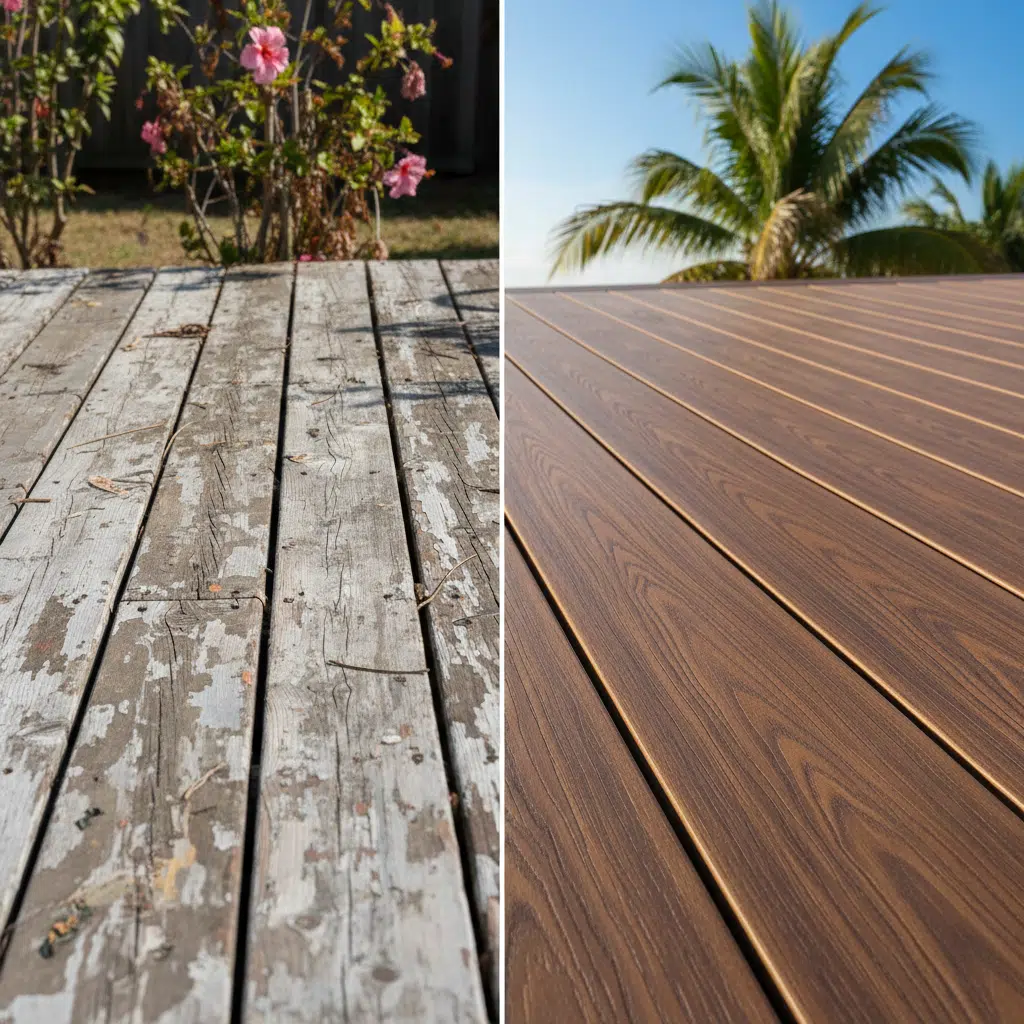
Traditional wood decks require regular staining or sealing to maintain color, typically every 2-3 years in Jacksonville’s climate. Even with diligent maintenance, wood gradually weathers to silver-gray unless constantly refreshed with new stain. This maintenance cycle represents both ongoing time investment and recurring expense throughout your deck’s lifetime.
Composite decking eliminates this cycle entirely. Once your composite deck reaches its weathered color in the first few months, that’s essentially the appearance it will maintain for the next 20-25+ years with no staining or sealing required. A simple periodic cleaning with soap and water is the only maintenance needed to keep your deck looking its best.
Real-World Performance in Jacksonville’s Climate
Jacksonville’s combination of intense UV exposure, high humidity, and frequent rain creates particularly challenging conditions for decking materials. Composite decking’s non-porous surface resists moisture absorption that leads to mold, mildew, and rot in traditional wood. The cap layer’s UV protection prevents the rapid fading that occurs in Florida’s strong sunshine.
We’ve seen composite decks we installed 10+ years ago that still look remarkably close to their original color, slightly lighter and more weathered, but maintaining their beauty and wood-like appearance without any special treatment. Compare this to wood decks from the same period that require constant refinishing or have been allowed to weather to gray, and the difference is striking.
Coastal conditions add additional challenges with salt air potentially causing corrosion and accelerated weathering. Premium composite materials handle these conditions well, though choosing products specifically designed for coastal performance (like MoistureShield) makes sense for waterfront Jacksonville properties. At Coastal Outdoor Construction, we help you select the right composite product for your specific location and exposure conditions.
How Wood-Like Do Composite Colors Really Look?
The realism of composite decking has improved dramatically, but it’s important to have realistic expectations about how these materials compare to genuine wood. Understanding what composite does well, and where it differs from real wood, helps you make an informed decision.
Realistic Grain Patterns and Textures
Modern composite decking features sophisticated grain patterns embossed into the cap layer that closely replicate real wood species. These aren’t simple, repetitive patterns, manufacturers use 3D scanning of actual wood boards to capture authentic grain variations, knots, and natural irregularities. The result is surface textures that look and feel remarkably like real wood.
Running your hand along premium composite decking reveals grain valleys and peaks that create tactile realism. The embossing also serves a practical function, providing slip resistance even when wet, an important safety feature in rainy Florida. Some products even incorporate simulated saw marks and other woodworking details that enhance the natural wood appearance.
However, differences remain. Composite boards have uniform width and perfectly straight edges that real lumber rarely displays. The grain patterns, while varied, do eventually repeat if you look closely across many boards. And composite has a slightly different feel underfoot than real wood, not necessarily better or worse, just different. Most homeowners quickly adapt to and appreciate this feel, but it’s worth noting if absolute wood authenticity is your priority.
Color Range and Natural Wood Mimicry
Composite manufacturers offer extensive color palettes that replicate popular wood species from warm teak and rich walnut tones to weathered gray and coastal driftwood hues. These colors are carefully designed to mimic how natural wood looks after weathering and aging, not freshly milled lumber, but the patina wood develops with time and exposure.
Popular color families include:
Warm Browns and Reds: Resembling tropical hardwoods like ipe, Brazilian redwood, or mahogany, these rich tones create sophisticated, elegant decks. They pair beautifully with traditional and Mediterranean architectural styles common in Jacksonville.
Gray and Silver Tones: Mimicking weathered cedar or reclaimed wood, gray composites deliver contemporary appeal or coastal aesthetics. These colors hide dirt well and create clean, modern outdoor spaces.
Honey and Tan Shades: Replicating natural cedar or pine, these lighter tones create bright, inviting spaces that complement traditional home styles. They work especially well for smaller decks or shaded areas where darker colors might feel heavy.
Multi-Tonal Blends: Combining multiple colors within a single product line creates the most realistic wood appearance with natural variation from board to board.
When selecting colors, request large samples that you can view in your actual outdoor space. Lighting conditions dramatically affect how colors appear, what looks perfect in a showroom might read differently in your backyard’s specific sun exposure. Most composite manufacturers offer sample programs or small material purchases that let you see actual boards in your environment before committing to a full deck installation order.
Border and Accent Options
Creating visual interest through color contrast takes your composite deck from simple to sophisticated. Many homeowners incorporate picture-frame borders in contrasting colors or add diagonal accent boards that break up large expanses of uniform decking. These design elements showcase composite’s consistency, achieving the same effect with real wood requires extensive sorting and matching of boards, while composite delivers predictable results.
Border details also solve practical problems. Ending deck boards perpendicular to the house creates weak fascia attachments, while a picture-frame border provides proper support and creates finished edges that eliminate exposed cut board ends. This functional benefit comes with the aesthetic bonus of architectural detail that elevates your deck’s appearance.
At Coastal Outdoor Construction, we help clients design custom deck layouts that incorporate these color and pattern elements, creating unique outdoor spaces that reflect personal style while maximizing composite’s performance advantages. Our design process includes 3D renderings when requested, so you can visualize exactly how different colors and patterns will look in your space before construction begins.
Factors That Affect Color Performance
While premium composite decking delivers excellent color retention, certain factors influence how well colors maintain their appearance over time. Understanding these variables helps you choose the right product and set proper expectations.
Product Quality and Price Points
Not all composite decking performs equally. Budget-friendly options generally use less sophisticated color technology, thinner cap layers, or non-capped construction that fades more rapidly. Premium products from established manufacturers like Trex, TimberTech, and MoistureShield invest in better color technology and offer stronger fade warranties.
The price difference between budget and premium composite is significant, sometimes 30-50% or more, but the performance gap is even larger. Budget composites may fade noticeably within 5-7 years, while premium products maintain color for 20+ years. When you factor in the deck’s lifespan and your long-term satisfaction, premium composite represents better value despite higher initial cost.
During your free estimate with Coastal Outdoor Construction, we discuss different product tiers and help you understand the performance and warranty differences. Our goal is helping you select materials that fit your budget while meeting your expectations for quality and longevity.
Installation Quality and Maintenance
Proper installation protects your investment by ensuring adequate ventilation, proper drainage, and correct fastener spacing, all factors that affect material performance and appearance. Poor installation can trap moisture, create hot spots that accelerate fading, or cause boards to warp and cup, changing their appearance.
Professional installation by experienced Jacksonville deck builders ensures your composite decking performs as designed. We follow manufacturer specifications exactly, use recommended fastening systems, and build proper support structures that prevent common problems. This attention to detail extends your deck’s life and maintains its appearance for decades.
While composite decking is marketed as “maintenance-free,” it’s more accurately “low-maintenance.” Regular cleaning removes dirt, pollen, and organic matter that can cause staining or discoloration over time. Most stains clean easily with soap and water or dedicated composite deck cleaners. Addressing stains promptly prevents them from setting and maintains your deck’s consistent color.
Exposure and Environmental Conditions
Decks in full sun experience more UV exposure and typically lighten slightly more than shaded decks over time. However, premium composite’s UV inhibitors minimize this difference, both sunny and shaded sections will maintain their color far better than wood alternatives. North-facing decks and areas with tree cover may be more prone to mildew or algae growth, which can cause green or black staining if not cleaned periodically.
Waterfront properties near Jacksonville’s beaches or the St. Johns River face additional challenges from salt air and higher humidity. Choosing composite products specifically engineered for coastal environments ensures optimal performance. These specialized products use enhanced moisture resistance and corrosion-resistant components that maintain appearance and structural integrity in harsh coastal conditions.
Installation Considerations for Color Longevity
How your composite deck is installed significantly impacts how well colors maintain their appearance over time. Professional installation that follows manufacturer specifications ensures optimal performance and protects your investment.
Proper Ventilation and Drainage
Composite decking requires adequate airflow underneath to prevent heat and moisture buildup that can affect color and performance. Minimum clearances specified by manufacturers ensure proper ventilation, typically 12-18 inches between ground and deck surface for adequate airflow.
Proper drainage prevents water from pooling on or beneath your deck. Standing water accelerates mildew growth and can cause staining that affects appearance. Professional installation includes proper pitch for water runoff, strategically placed drainage solutions, and construction techniques that keep water flowing away from your deck and home foundation.
Coastal Outdoor Construction follows manufacturer installation guidelines precisely while incorporating Jacksonville-specific best practices developed through years of local experience. We understand how our climate affects decking performance and build accordingly, ensuring your deck looks great and performs well for its entire lifespan.
Fastener Selection and Board Spacing
Using manufacturer-recommended fastening systems prevents issues that can affect appearance and performance. Color-matched screws or hidden fastening systems maintain clean board surfaces without visible fasteners that can cause visual disruption or corrosion staining over time.
Proper board spacing allows for thermal expansion and contraction that occurs with temperature changes. Composite materials expand and contract more than wood, if boards are installed too tightly, they can buckle or cup when temperatures rise, creating wavy surfaces that affect appearance and performance. Following manufacturer spacing requirements prevents these problems.
Our installation teams use specialized tools and follow precise spacing specifications to ensure every board is positioned correctly. This attention to detail might take slightly longer during installation but prevents problems that could affect your deck’s appearance and longevity down the road.
The Verdict: Are Composite Colors Worth It?
For Jacksonville homeowners weighing composite versus wood decking, color performance strongly favors composite materials. Yes, composite deck colors are long-lasting and remarkably wood-like when you choose premium products from established manufacturers. While they don’t perfectly replicate every aspect of real wood, they deliver superior color retention, eliminate ongoing staining and sealing requirements, and maintain their appearance far longer than traditional lumber.
The initial cost premium for composite materials is real, typically 30-50% more than pressure-treated wood for materials alone. However, when you factor in eliminated maintenance costs, longer lifespan, and consistent appearance without ongoing care, composite decking delivers better long-term value for most homeowners. You’re buying decades of enjoyment with minimal upkeep rather than committing to a maintenance cycle that lasts your deck’s lifetime.
Modern composite colors and textures have reached the point where most homeowners are extremely satisfied with the wood-like appearance, especially after seeing how well the materials maintain their looks over time. The slight difference in feel underfoot and the recognition that it’s not “real wood” become non-issues quickly when balanced against the practical benefits composite delivers.
Ready to Build Your Low-Maintenance Composite Deck?
If composite decking’s combination of wood-like beauty and minimal maintenance appeals to you, contact Coastal Outdoor Construction today for a free consultation and estimate. We’ll show you samples from leading manufacturers, discuss color options that complement your home, and provide honest guidance about which products best fit your needs and budget.
With over a decade of experience building composite decks throughout Jacksonville and Duval County, we understand what works in our local climate. Our veteran craftsmen follow manufacturer specifications exactly while incorporating best practices that ensure your deck looks beautiful and performs flawlessly for decades.
Take advantage of our current promotion offering $250 off new deck installations and free removal of your old deck or patio. We also offer flexible financing options that make premium composite decking affordable with manageable monthly payments. Call us at (904) 664-6364 or fill out our online form to schedule your free estimate.
Explore our gallery to see completed composite deck projects in various colors and styles, or read our blog for more guidance on deck materials, design ideas, and outdoor living inspiration. Your beautiful, low-maintenance composite deck is just a phone call away, let’s start planning your perfect outdoor space today.
Frequently Asked Question
A well-designed front porch is a high-return investment that can increase your home’s resale value by as much as 10-15%. Beyond the financial boost, it enhances curb appeal and provides functional outdoor living space that is highly attractive to buyers in the Jacksonville market.
Composite decking is considered the gold standard because it resists moisture, rot, and UV damage without the need for constant staining or sealing. For homeowners worried about the sun, many modern composite options feature heat-reflective technology to keep the surface cool underfoot.
Yes, most front porch additions or structural modifications require building permits to ensure they meet local safety and hurricane resiliency codes. Professional contractors typically handle the application process and coordinate necessary inspections to protect your investment and legal standing.
Installing an outdoor-rated ceiling fan is one of the most effective ways to circulate air and deter insects during humid Florida afternoons. Additionally, choosing light-colored materials and adding strategic greenery or retractable awnings can help reduce heat absorption and provide much-needed shade.
Before building, you should review your HOA’s architectural guidelines for specific restrictions on allowable materials, paint colors, and railing styles. It is important to secure written approval from your association to ensure your new porch maintains neighborhood harmony and avoids potential fines.

Written By:
Coastal Outdoor Construction
Let's Talk About Your Decking Project
After we get some information from you, we’ll set up a time to discuss your project in further detail.