Ask any Jacksonville homeowner why they don’t use their backyard more during summer, and the answer is almost always the same: it’s too hot. And they’re not exaggerating. Jacksonville’s heat index regularly pushes above 100°F from June through September, and a backyard without shade can feel like standing inside an oven.
The immediate instinct is to build a full roof, a covered patio, a solid overhead structure that blocks the sun completely. And that’s a valid solution. But it’s not the only one, and it’s not always the right one. Full roofed structures trap heat in ways that can make covered areas feel stuffy and uncomfortable, especially when there’s no breeze moving through.
Stop Dreaming.
Start Building Today!
What most Jacksonville backyards actually need is a combination of smart shade, strategic airflow, intelligent surface choices, and landscaping that works with the local climate. Here’s how to build a cool, comfortable outdoor space without committing to a full enclosed structure.
Why Full Roofs Aren’t Always the Answer
A completely solid overhead roof blocks sun effectively, but it also blocks air movement. In Jacksonville’s humid summer climate, still air feels far hotter than moving air, a concept called apparent temperature or heat index. A covered patio with no airflow can feel just as uncomfortable as an uncovered one on a very humid, still day, especially in the early afternoon when temperatures peak.
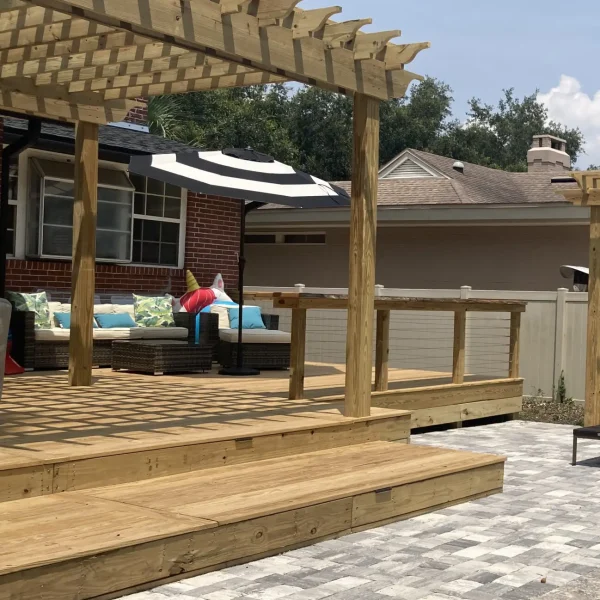
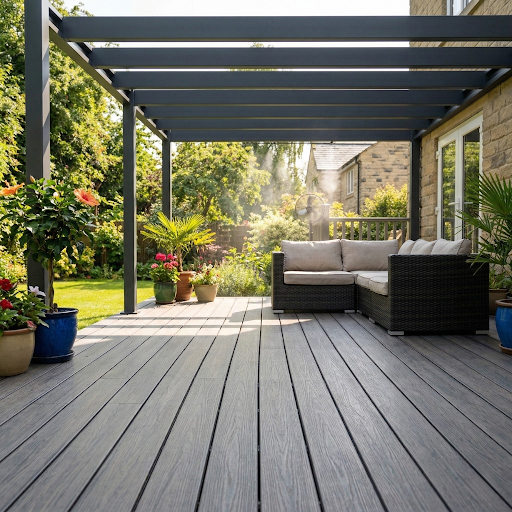
The most comfortable outdoor spaces in Florida balance shade with ventilation. That’s why open-structure options like pergola installations often create a more pleasant outdoor experience than a fully roofed structure, the overhead element filters direct sunlight while still allowing air to move horizontally through the space.
That said, full coverage structures absolutely have a place: pavilions and gazebos are the right choice when rain protection is the primary concern, or for covering an outdoor kitchen where cooking heat needs to escape upward. The key is matching the structure type to the problem you’re solving.
The Most Effective Ways to Cool Your Jacksonville Backyard
Start With a Pergola and Ceiling Fans
A well-positioned pergola with ceiling fans installed beneath it is arguably the single most impactful thing you can do to make a Jacksonville backyard usable during summer. Here’s why this combination works so well:
The pergola’s overhead structure, whether traditional open slats or a louvered design, intercepts direct solar radiation before it reaches the surface below. Direct sun exposure on a patio surface in Jacksonville in July can raise the surface temperature 40–60°F above ambient air temperature. Overhead shade eliminates that radiant heat load.
The ceiling fans then address the humidity-heat combination. Moving air increases evaporative cooling from skin, making the felt temperature 5–8°F lower than still air at the same temperature and humidity. On a 92°F afternoon, that difference is meaningful.
At Coastal Outdoor Construction, our pergolas are built using pressure-treated lumber with hurricane-rated brackets designed for Florida’s wind conditions, and they’re built to accommodate fan mounting as a standard feature.
Choose Louvered Pergola Design for Double Duty
A standard open-slat pergola does an excellent job with airflow but doesn’t stop rain. A louvered pergola adds adjustable overhead panels that can close during rain events and open during dry, hot periods for maximum ventilation. This gives you complete control over the overhead environment year-round, shade and ventilation when it’s clear, weather protection when it rains.
Louvered systems are a meaningful upgrade over fixed-slat designs and are increasingly popular in Jacksonville where afternoon rain is frequent and unpredictable during summer months. Review our pergola page to see the design options available.
Use Shade Sails and Fabric Canopies Strategically
Shade sails, tensioned fabric panels rigged between anchor points, can cover irregular areas that a fixed structure doesn’t reach, or supplement a pergola at specific sun angles during morning and late afternoon when side exposure is stronger than overhead exposure.
Shade sails are less durable than built structures and require seasonal takedown in strong wind conditions, but they’re a cost-effective way to add targeted shade coverage in specific areas without permanent construction. They work particularly well over play areas, seating zones adjacent to the main shade structure, or transitional areas between a deck and a pool.
Choose Your Ground Surface Carefully
This point is dramatically underappreciated. The surface material beneath your feet contributes significantly to the felt heat in your outdoor space through a phenomenon called thermal mass and radiant re-emission. Dark concrete and asphalt absorb solar heat aggressively throughout the day and re-emit it as radiant heat after the sun moves on, keeping the space hot for hours after direct sun exposure ends.
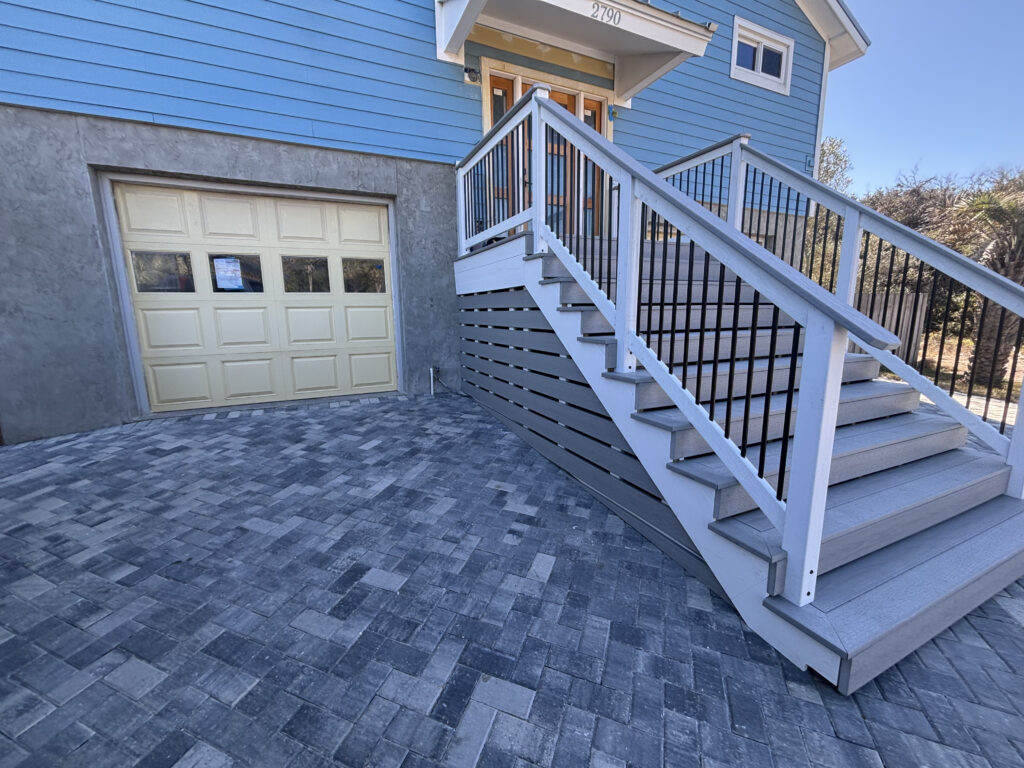
Lighter-colored paver installations with high solar reflectance (SRI) values significantly reduce surface temperature compared to standard concrete or asphalt. Natural stone and some composite paver products reflect rather than absorb solar energy. Even the color matters: a light tan or gray paver surface can be 20–30°F cooler underfoot than a dark charcoal or black surface on the same afternoon.
For pool decks, this is especially important because pool deck areas receive intense, direct sun for most of the day and are typically walked on barefoot. Choosing the right surface material directly impacts safety and comfort.
Install Misting Systems for Peak Heat Days
A pergola or covered outdoor area with a low-pressure misting system installed around the perimeter can reduce ambient air temperature by 10–20°F in dry conditions. In humid Jacksonville summers, the effectiveness is somewhat reduced compared to drier climates because evaporation is slower, but even in high humidity, misting provides noticeable cooling relief, especially in the transition from late afternoon into evening.
Misting systems are best installed at the time of pergola or shade structure construction, when running the supply line is straightforward.
Create Shade With Privacy Fencing and Screening
A solid fence installation along the western or southwestern property boundary can intercept afternoon sun and block direct glare into seating areas. This works best on smaller lots where the fence is relatively close to the outdoor living zone. Privacy screening also reduces wind-driven heat exposure during periods of hot, gusty weather, a scenario Jacksonville experiences periodically during late spring and summer.
Add Strategic Landscaping
No installed structure cools a backyard more naturally and cost-effectively over time than the right trees and plants in the right positions. This is one of the most underused strategies in Florida backyard design.
Trees on the west and southwest. The sun’s most intense exposure in Jacksonville comes from the west and southwest during late afternoon hours, exactly when heat accumulates most on a backyard patio. A medium to large shade tree positioned 15–25 feet from the patio on the western perimeter intercepts this afternoon sun before it reaches the outdoor living area.
Vine-covered structures. A pergola covered in a climbing vine like Confederate jasmine or a fast-growing Florida-adapted climber creates a dense overhead canopy that surpasses what a bare pergola delivers. The plant mass absorbs solar energy before it becomes radiant heat at the surface level.
Grass vs. hardscape balance. Hard surfaces absorb and radiate heat. Grass and planted areas absorb solar energy through photosynthesis and release it through evapotranspiration, which actually cools the surrounding air. A backyard with a healthy proportion of lawn and planted beds compared to hardscape will always feel cooler than an all-hardscape space. Our landscaping services include sod installation, grading, and landscape design that strike this balance.
Combining Strategies for Maximum Effect
The most comfortable Jacksonville backyards don’t rely on any single cooling solution, they layer multiple approaches:
A pergola with a louvered roof handles direct overhead sun. Ceiling fans address humidity-heat interaction. Light-colored pavers reduce ground-level radiant heat. Strategic trees shade the perimeter. A misting system provides emergency cooling on the hottest days. Together, these create an outdoor environment that’s genuinely comfortable even in the peak of summer.
This kind of layered design doesn’t require the most expensive options in every category. A standard pergola with fans and thoughtful plant placement delivers most of the benefit at a fraction of the cost of a fully roofed, climate-controlled outdoor room.
Ready to Design a Cooler Backyard?
At Coastal Outdoor Construction, we’ve been building Jacksonville outdoor spaces since 2013, and we’ve learned exactly what works in this climate. From pergola design to paver selection to landscaping planning, our team handles the full outdoor living picture.
Contact us for a free consultation, or browse our outdoor living spaces page for design inspiration. Learn more about our team and our approach on the about us page. If you’re in the St. Augustine area, our St. Augustine service page has more regional information. And check out recent work from across the area in our project gallery.
You can also explore related topics in our blog, including posts on HOA rules for outdoor structures, screened vs. open deck comparisons, and outdoor kitchen design for Florida homes.
Frequently Asked Questions
What's the most cost-effective single change that will make my Jacksonville backyard cooler?
Adding a pergola with ceiling fans is typically the highest-impact single change at a reasonable cost. It addresses both direct solar exposure and the humidity-heat combination that makes still, unshaded outdoor spaces feel unbearable in Jacksonville's summer months.
Does a pergola actually make a meaningful temperature difference in Florida's humidity?
Yes. A pergola reduces direct radiant heat by blocking overhead solar exposure, which can raise surface temperatures 40–60°F above ambient on a clear summer day. Combined with fans, the apparent temperature difference under a well-designed pergola versus an unshaded patio is dramatic, often 15–25°F cooler in terms of felt temperature.
Are lighter paver colors significantly cooler than darker ones in Florida?
Yes, meaningfully so. Lighter-colored pavers with high solar reflectance values can be 20–30°F cooler underfoot than dark pavers on a direct-sun afternoon. This matters most for pool deck surfaces and primary walking areas where barefoot contact is expected.
Do misting systems work well in Jacksonville's high humidity?
Misting systems are less effective in high humidity than in dry climates, but they still provide noticeable cooling, particularly in the transition from afternoon to evening when humidity drops slightly. The effect is most pronounced in partially enclosed or sheltered outdoor areas where the mist can concentrate.
Can landscaping really make a noticeable temperature difference in my backyard?
Absolutely. A mature shade tree on the western side of a patio can reduce afternoon temperatures in the shaded area by 10–15°F compared to direct sun exposure. The combination of shade, evapotranspiration from plants, and reduced radiant heat from less hardscape creates a measurably cooler microclimate over time.

Written By:
Coastal Outdoor Construction
Let's Talk About Your Decking Project
Enter your details below to lock in your $500 lighting credit.