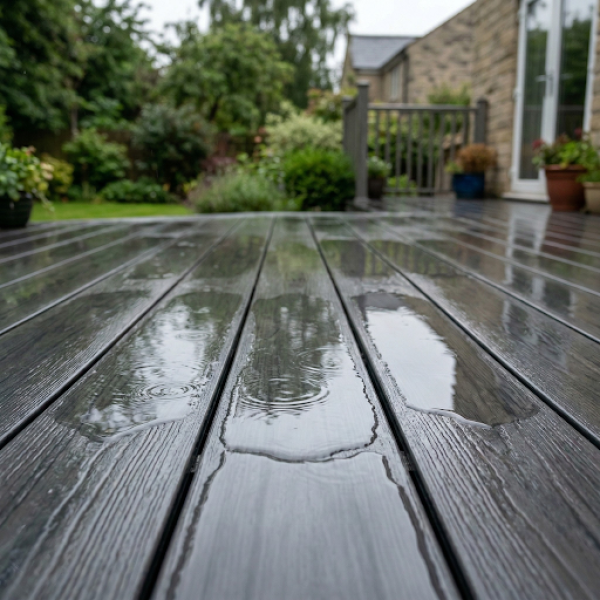
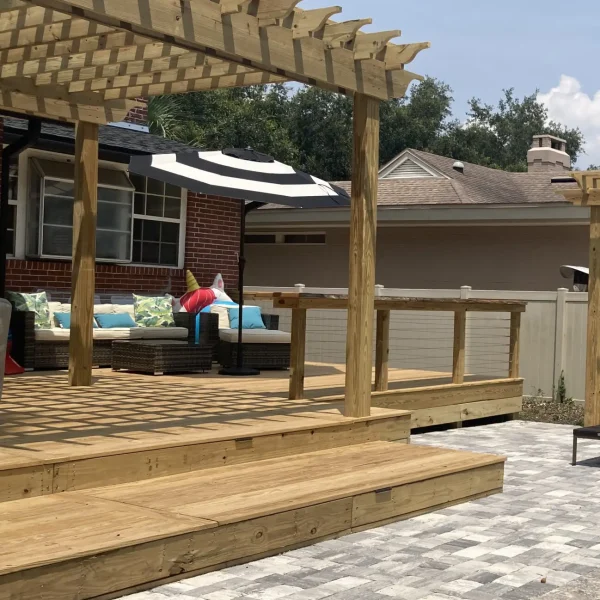
If you’re planning to build a deck in Jacksonville or anywhere along Florida’s coast, chances are you’ve already asked the most important question: “What type of decking material is going to last the longest?”
After all, the Florida climate doesn’t spare outdoor structures. Between the humidity, sun exposure, tropical storms, and salt air, your deck needs to do more than just look good; it needs to withstand years of use without requiring constant maintenance or repair.
Stop Dreaming.
Start Building Today!
The most common decision homeowners face is between composite decking and wood decking. Both have their strengths, but when it comes to longevity, durability, and overall value, they perform very differently in Florida’s environment.
Let’s walk through the real-world pros and cons of each so you can make the best choice for your home and your future weekends.
Why Lifespan Matters More Than You Think
A new deck isn’t a short-term investment. Whether you’re planning to enjoy backyard barbecues, entertain by the pool, or increase your home’s resale value, the deck you build today should still be standing strong 10, 20, even 30 years from now.
That’s why the material you choose matters. It’s not just about how it looks, it’s about how well it resists rot, fading, termites, warping, and cracking over time.
Composite Decking: Built to Last with Less Maintenance
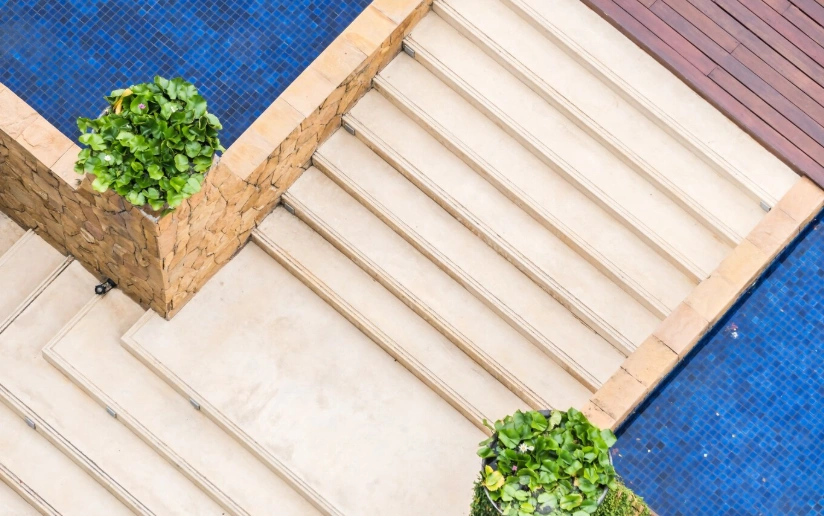
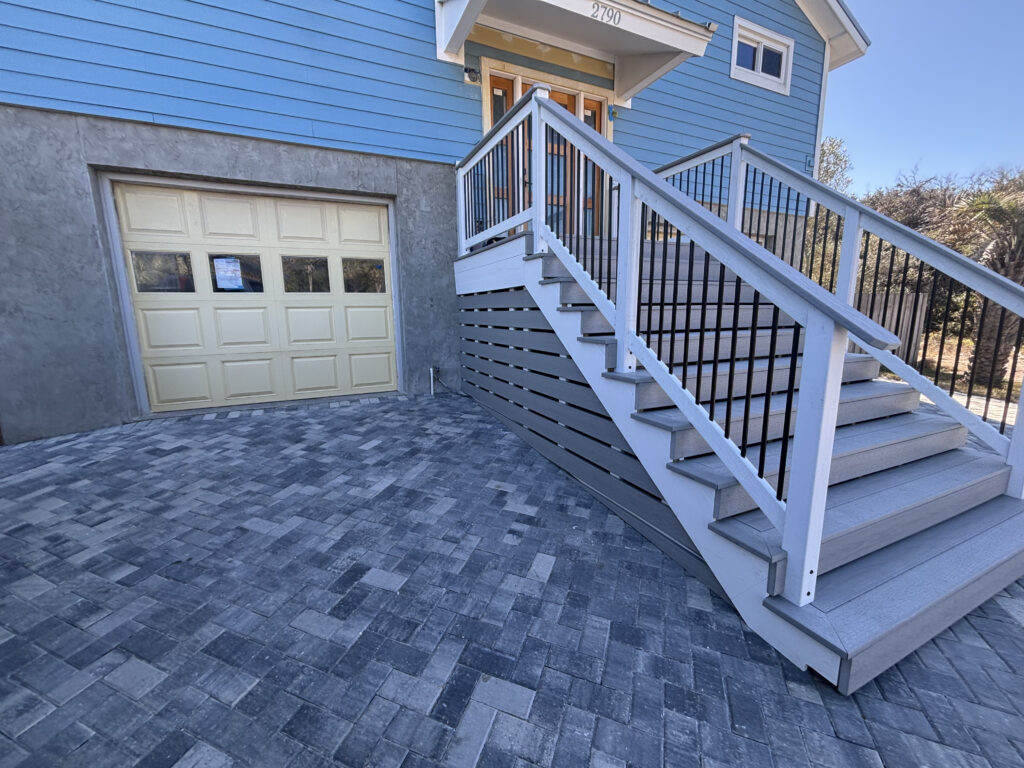
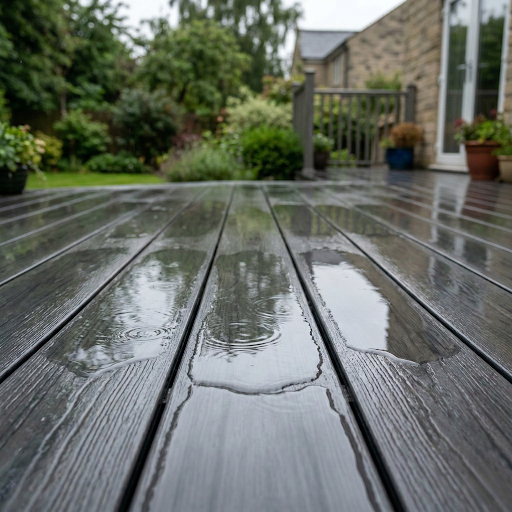
Composite decking is made from a blend of recycled plastic and wood fibers. Brands like Trex, MoistureShield, and Azek have refined this material over the years to be incredibly resistant to weather, moisture, and pests.
Pros of Composite Decking:
- Long lifespan: Most composite decks come with warranties ranging from 25 to 50 years. Some MoistureShield lines even offer 50-year fade and structural coverage.
- No staining or painting required: Composite holds its color and finish with little effort.
- Resistant to rot, mold, and termites: A huge plus in Florida’s humid climate.
- Easy to clean: Just rinse with a hose or use mild soap—no pressure washing or sanding.
- Eco-friendly: Many brands are made from recycled materials and qualify as low-waste products.
Cons of Composite Decking:
- Higher upfront cost: Expect to pay more per square foot compared to wood.
- Can get hot underfoot: Some products may retain heat in full sun, although newer options, such as Trex Lineage, offer cooling technology.
- Limited customization: While colors and textures have improved, you can’t stain or refinish it later if your tastes change.
Real-World Lifespan in Florida
Composite decks from Coastal Outdoor Construction frequently last 30+ years in Jacksonville’s climate, with minimal upkeep. That’s decades of durability and peace of mind—no sanding, staining, or structural repairs required.
Pressure-Treated Wood Decking: Traditional and Affordable (But Needs Attention)
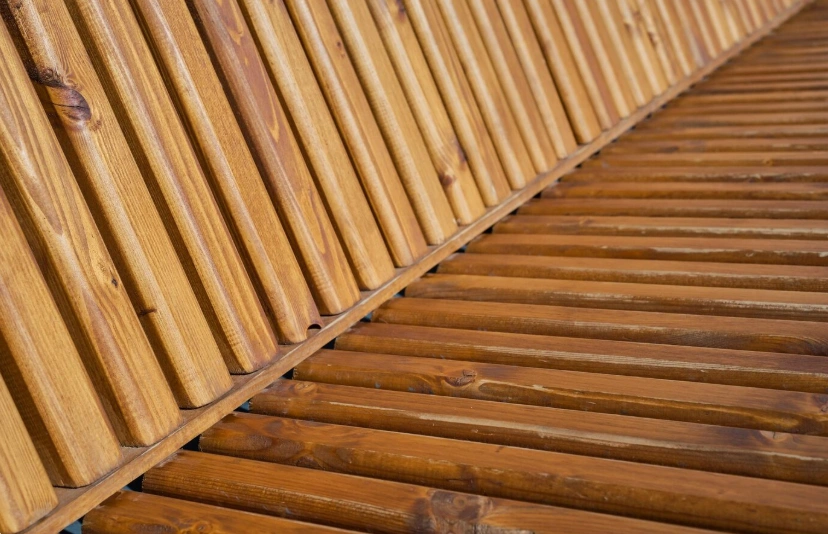
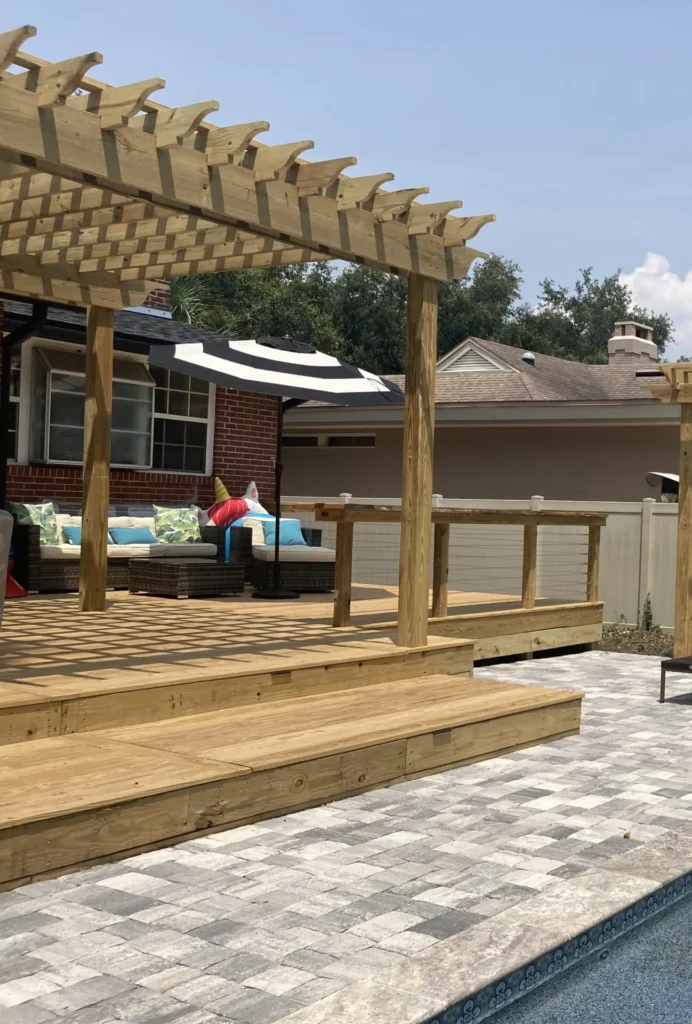
Pressure-treated wood remains one of the most commonly used decking materials in Florida, thanks to its affordability and wide availability. At Coastal Outdoor Construction, we often use Severe Weather pressure-treated pine, especially when clients want a natural look and are working with a tighter budget.
Pros of Pressure-Treated Wood:
- Lower initial cost: Wood is far more budget-friendly upfront.
- Natural wood appearance: Warm, rustic aesthetics that can be stained or painted to your liking.
- Easier for DIY repairs and modifications: If you’re handy, you can swap boards or re-stain yourself.
- Great for custom builds: Especially for pergolas, pavilions, and cabanas that require flexible framing.
Cons of Pressure-Treated Wood:
- Shorter lifespan: Even with good care, expect a lifespan of 10 to 15 years, sometimes less in high-moisture or sun-exposed areas.
- High maintenance: Needs regular sealing and may warp, crack, or fade if not maintained consistently.
- Susceptible to rot and pests: Even treated wood isn’t immune to Florida’s harsh conditions.
- Color changes over time: Will gray without regular staining or oiling.
Real-World Lifespan in Florida:
With good maintenance, wood decks can last a decade or more in Jacksonville. However, if left untreated or exposed to coastal weather, they’ll show wear and tear much sooner than composite options.
What Lasts the Longest? The Verdict
If your goal is to maximize lifespan, reduce maintenance, and get long-term value from your investment, composite decking is the clear winner.
It’s built for Florida’s extremes. It requires less upkeep. And it stands the test of time without fading, rotting, or splintering.
That’s why at Coastal Outdoor Construction, we often recommend Trex, MoistureShield, or Azek for homeowners who want to build once and enjoy their deck for decades.
That said, pressure-treated wood still has a place, especially for custom structures or clients looking to stretch their budget. Please note that it will require more hands-on maintenance to keep it looking and performing at its best.
Build a Deck That’s Worth the Investment
The “best” decking material is the one that fits your goals, budget, and lifestyle. Whether you’re thinking long-term with composite or want the flexibility of wood, our team can help you make the right decision.
At Coastal Outdoor Construction, we’ve been designing and building decks across Jacksonville and Northeast Florida since 2013. We offer:
- Certified, licensed, and insured professionals
- Free estimates and 3D renderings
- Marine-grade and composite material options
- Warranties up to 50 years
- Financing options and up to $250 off installation
Let’s build a deck that lasts and looks great while doing it.
Get your free estimate today, and we’ll help you choose the best materials for your home and budget.
FAQs
Composite decking lasts the longest, especially in Florida. Brands like Trex and MoistureShield offer fade and structural warranties of up to 50 years. Composite resists rot, warping, termites, and UV damage better than natural wood.
Typically 10–15 years with proper maintenance. Without consistent sealing and care, the lifespan drops significantly, especially in coastal or full-sun environments.
Yes, especially if you plan to live in your home long-term. Composite materials require less maintenance, offer better durability, and won’t need repairs or refinishing every few years, making them more cost-effective over time.
Absolutely. Many homeowners opt for composite decking surfaces and wood for structural or decorative elements. Coastal Outdoor can help you design a blended deck that strikes a balance between budget and performance.
We recommend Trex, MoistureShield, and Azek for their proven performance in Florida’s climate. MoistureShield’s Vision and Elevate lines, in particular, are excellent for high-humidity or poolside installations.
Yes. Composite decks generally last two to three times longer than pressure-treated wood. With proper installation and minimal maintenance, composite materials can last 25–50 years, while wood typically lasts 10–15 years.

Written By:
Coastal Outdoor Construction
Let's Talk About Your Decking Project
Enter your details below to lock in your $500 lighting credit.