Why Water Pools on Some Decks After Rain (And How to Fix the Drainage Problem)
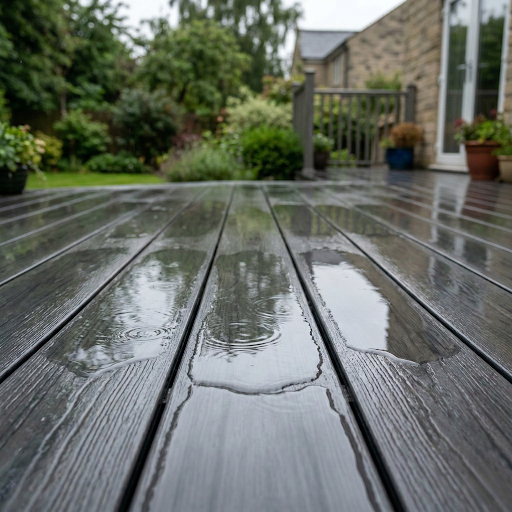
If you’ve noticed standing water on your deck after a rainstorm, you’re dealing with one of the most common — and most commonly ignored — problems in residential deck construction. Water that doesn’t drain off a deck surface within a reasonable time isn’t just an inconvenience. It accelerates wood rot, promotes mold and mildew growth, creates slip hazards, and can eventually compromise the structural framing beneath the boards.
In Jacksonville, where annual rainfall averages around 50 inches and summer thunderstorms are almost daily occurrences, a deck that doesn’t drain properly becomes a maintenance nightmare. Understanding why water pools and knowing how to fix it can save thousands in premature repairs or replacement.
Stop Dreaming.
Start Building Today!
The Most Common Causes of Deck Water Pooling
Water pooling on a deck is always a drainage problem, but the specific cause varies. Here are the most frequent culprits we see on Jacksonville decks.
Insufficient or Incorrect Slope
Every deck should have a slight pitch — typically a minimum of 1/8 inch per foot — that directs water away from the house and toward the deck’s outer edge. Many decks are built perfectly level, which looks great but creates a surface where water has no reason to move in any direction. It sits until it evaporates.
On attached decks, the problem is compounded when the deck is level or, worse, pitched slightly toward the house. This directs water toward the ledger board and the home’s exterior wall, exactly where you don’t want moisture accumulating.
Inadequate Board Spacing
Deck boards need consistent gaps between them to allow water to pass through to the ground below. The standard gap for most decking materials is approximately 1/8 inch. When boards are installed too tightly, or when the gaps close over time as wood expands from moisture absorption, water can’t drain through the surface and pools instead.
Composite decking tends to maintain more consistent spacing over time compared to natural wood, which is one reason it often drains better long-term. However, even composite boards need to be installed with proper gapping from the start.
Debris Blocking Drainage Gaps
Even properly spaced deck boards will pool water if the gaps between them are packed with organic debris, leaves, dirt, seed pods, and pollen that accumulate over time and essentially create a dam between boards. This is especially common in Jacksonville’s tree-heavy neighborhoods where oak leaves and pine needles fall consistently.
Regular cleaning of deck board gaps with a stiff brush or pressure washer typically resolves this version of the problem. If cleaning alone doesn’t fix it, the underlying spacing or slope is likely the real culprit.
Low Points or Warped Boards
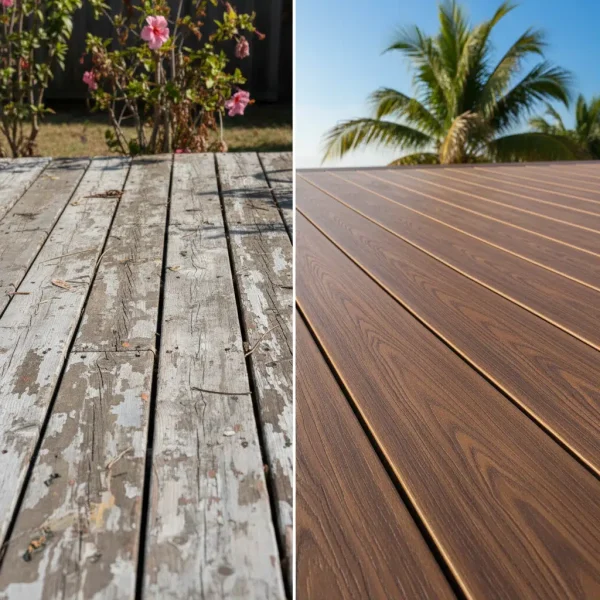
Individual boards that have warped, cupped, or sagged create low spots on the deck surface where water collects. This is a common issue with older wood decks where boards have been through years of expansion, contraction, and moisture cycling. Cupped boards, where the edges of the board curve upward, act as miniature channels that hold water rather than shedding it.
Composite decking is significantly more resistant to warping than natural wood, which is one of the reasons composite deck installations tend to maintain drainage performance longer over the life of the deck.
Deck Ledger Area and Flashing Problems
Where an attached deck meets the house, improper flashing installation can cause water to migrate behind the ledger board and pool in the juncture area rather than draining away. Over time, this creates rot in both the deck framing and the home’s rim joist, a repair that’s far more costly than addressing the flashing upfront.
Signs of a ledger drainage problem include persistent dampness at the base of the house wall near the deck connection, staining on the exterior siding, and unusual pooling directly against the home.
How to Fix Deck Drainage Problems
The right fix depends on the cause. Here are the most effective solutions, ranging from simple maintenance to structural corrections.
Replace Warped or Damaged Boards
If specific boards are cupping, crowning, or sagging, replacing those individual boards with new material restores proper drainage across the surface. When replacing boards on an older deck, consider upgrading to composite material for the replacement boards if the framing supports it — you’ll get significantly better long-term moisture resistance.
For decks where warping is widespread rather than limited to a few boards, resurfacing the entire deck surface may be more cost-effective than piecemeal replacement. If multiple boards are affected, a larger resurfacing project may be more cost-effective than piecemeal replacement.
Deck Slope Correction
If inadequate slope is the root cause, the correction can be addressed either at the framing level, adjusting joist heights to create proper pitch, or at the surface level using tapered composite or PVC boards that build slope into the board installation without modifying the frame.
A professional assessment is the right starting point. When our team performs an on-site deck installation consultation, we evaluate existing drainage conditions as part of the standard process. We can identify whether slope correction, resurfacing, or full replacement is the most practical and cost-effective path.
Add Under-Deck Drainage Systems
For elevated decks where water passing through the boards needs to be managed beneath the structure, under-deck drainage systems, aluminum trough systems that collect and redirect water from between joists, can turn the area beneath the deck into usable dry space while protecting the framing from chronic moisture exposure.
Address the Surrounding Drainage
If landscape grading or poor site drainage is contributing to deck pooling, adding catch basins, regrading the surrounding yard, or installing a French drain perimeter can intercept water before it reaches the deck surface. Our team integrates drainage solutions with outdoor renovations routinely, and reviewing our hardscaping services provides a clear picture of what’s possible.
When It’s Time to Replace Rather Than Repair
If your deck has significant structural rot, widespread warped boards, or a frame that was never properly pitched, targeted repairs may be less cost-effective than a full replacement. A new deck built with proper slope, appropriate board spacing, quality materials, and integrated drainage addresses all pooling issues permanently rather than patching individual symptoms.
Modern deck construction techniques and materials have improved significantly, and a properly built deck in Jacksonville’s climate should drain effectively for decades with minimal maintenance.
You can review our gallery to see completed deck projects across Jacksonville, or visit our blog for more project guidance. Learn more about who we are on the about us page, or contact us directly for a free on-site assessment of your deck’s drainage situation. We also serve St. Augustine and surrounding areas, see our St. Augustine service page for details.
Frequently Asked Questions
How much slope does a deck need to drain properly?
A minimum slope of 1/8 inch per lineal foot is the standard recommendation for deck drainage. This pitch is barely perceptible when walking on the surface but is sufficient to keep water moving toward the perimeter and draining away rather than pooling.
Can I fix deck pooling by adding slope without replacing the entire deck?
In many cases, yes. If the framing is in good condition, tapered sleepers or joist shims can be used to create pitch across the deck surface without tearing out the entire frame. The specific approach depends on how level the current deck is and how the framing is configured.
Is pooling water on a composite deck less serious than on a wood deck?
Composite boards themselves are more moisture-resistant than wood, so surface pooling creates fewer direct risks to the boards. However, the framing beneath a composite deck is still typically wood, and chronic drainage issues can still damage joists, beams, and ledger boards over time.
How often should I clean my deck's drainage gaps in Jacksonville?
In Jacksonville, cleaning deck board gaps at least twice a year is recommended — once in spring after pollen season and once in late fall after leaf drop. Properties with heavy tree coverage may need more frequent cleaning to prevent debris from blocking drainage.
Does water that drains through deck boards cause problems underneath?
Yes. Water that drains through deck boards needs somewhere to go. Without an under-deck drainage system or proper site grading, the soil beneath the deck remains chronically wet, which accelerates rot in support posts and creates a damp environment that attracts insects.
How do I tell if my deck's ledger board has water damage from poor flashing?
Signs include staining or discoloration on the exterior siding near the deck connection, soft spots or spongy feel when pressing on the home's wall near the ledger, musty odor near the connection point, or visible rust staining from corroding fasteners. Any of these warrant a professional inspection.

Written By:
Coastal Outdoor Construction
Let's Talk About Your Decking Project
After we get some information from you, we’ll set up a time to discuss your project in further detail.