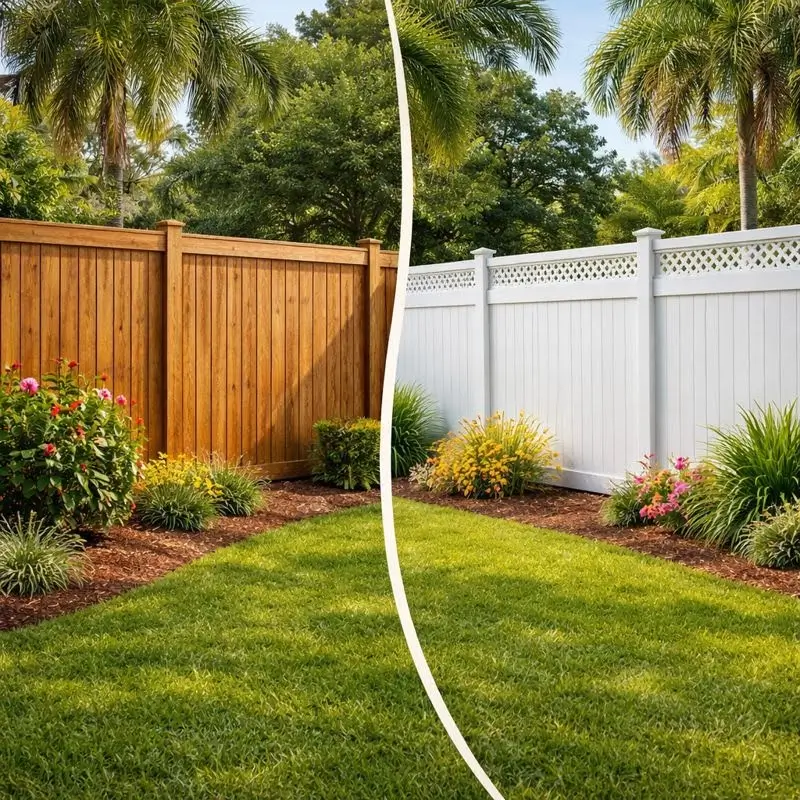
Choosing between wood and vinyl fencing is one of the most common decisions Jacksonville homeowners face when planning fence installation. Both materials offer distinct advantages, but Florida’s unique climate, intense sun, high humidity, and seasonal storms, significantly impacts how each performs over time.
Understanding the real costs, maintenance requirements, and expected lifespan of each option helps you make an informed decision that aligns with your budget, aesthetic preferences, and long-term property goals.
Stop Dreaming.
Start Building Today!
Wood Fencing: The Traditional Choice
Wood fencing has been the standard in American residential properties for generations, offering natural beauty and versatility that many homeowners prefer.
Types of Wood Fencing Common in Jacksonville
Pressure-Treated Pine
This is the most affordable and popular wood fencing option in Northeast Florida. Pressure treatment infuses the wood with preservatives that resist rot, insects, and decay.
- Lifespan: 15-20 years with proper maintenance
- Initial cost: $15-$25 per linear foot installed
- Best for: Budget-conscious homeowners wanting traditional wood appearance
Cedar
Western red cedar contains natural oils that repel insects and resist rot without chemical treatment. It’s lightweight, stable, and develops an attractive silvery-gray patina if left unstained.
- Lifespan: 20-25 years with minimal maintenance
- Initial cost: $25-$40 per linear foot installed
- Best for: Homeowners prioritizing natural rot resistance and appearance
Cypress
Native to the southeastern United States, cypress offers similar benefits to cedar with even better moisture resistance, crucial for Florida’s humid climate.
- Lifespan: 20-30 years with proper care
- Initial cost: $30-$45 per linear foot installed
- Best for: Those wanting premium wood performance in humid conditions
Advantages of Wood Fencing
Natural Aesthetic Appeal
Wood offers warmth and organic beauty that complements traditional architecture. It can be stained or painted in virtually any color, allowing customization to match your home’s exterior.
Immediate Availability and Installation
Wood fence installation typically happens faster than vinyl because materials are readily available and can be cut on-site to accommodate property irregularities.
Repair and Replacement
Individual damaged boards can be replaced without affecting surrounding sections. This makes repairs straightforward and less expensive than replacing entire vinyl panels.
Lower Initial Investment
For homeowners with immediate budget constraints, wood fencing costs substantially less upfront than comparable vinyl options.
Disadvantages of Wood Fencing in Florida
Maintenance Requirements
Florida’s climate accelerates wood deterioration. Expect to perform these maintenance tasks:
- Staining or sealing every 2-3 years
- Annual inspections for rot, insect damage, and loose boards
- Periodic power washing to remove mildew and algae
- Replacing damaged boards as needed
Susceptibility to Weather Damage
Jacksonville’s combination of intense UV exposure, high humidity, and occasional storms takes a toll on wood fencing. Even treated wood will eventually crack, warp, and rot without consistent maintenance.
Vulnerability to Pests
Termites and carpenter ants are active year-round in Northeast Florida. While pressure-treated wood resists insects better than untreated lumber, no wood fence is completely immune.
Color Fading
UV exposure causes wood stain and paint to fade, requiring regular refinishing to maintain appearance.
Vinyl Fencing: The Low-Maintenance Alternative
Vinyl (PVC) fencing has gained significant popularity in Florida over the past two decades, particularly among homeowners seeking minimal upkeep.
Types of Vinyl Fencing
Standard Virgin Vinyl
Made from 100% virgin PVC material, this is the highest quality vinyl fencing. It resists discoloration, cracking, and UV damage better than recycled vinyl products.
- Lifespan: 20-30 years
- Initial cost: $25-$40 per linear foot installed
- Best for: Those prioritizing longevity and minimal maintenance
Reinforced Vinyl
Some vinyl fencing includes internal aluminum reinforcement for added strength, particularly important in hurricane-prone areas like Jacksonville.
- Lifespan: 25-30+ years
- Initial cost: $30-$50 per linear foot installed
- Best for: Areas exposed to high winds or properties requiring maximum durability
Advantages of Vinyl Fencing
Minimal Maintenance
This is vinyl’s primary selling point. Your fence maintenance consists of occasional washing with soap and water, no staining, sealing, or painting required.
Weather Resistance
Quality vinyl fencing withstands Florida’s heat, humidity, rain, and UV exposure without rotting, warping, or cracking. It won’t deteriorate from moisture contact, making it ideal for areas near sprinklers or pool splashing.
Pest Immunity
Termites, carpenter ants, and other wood-boring insects have zero interest in vinyl fencing. This eliminates a significant concern for Jacksonville homeowners.
Color Retention
Modern vinyl fencing uses color throughout the material rather than surface coating. While some fading occurs over decades, it’s minimal compared to painted or stained wood.
Wind Resistance
When properly installed with reinforced posts, vinyl fencing performs well in high winds. The flexibility of vinyl allows some give during storms rather than snapping like rigid wood.
Disadvantages of Vinyl Fencing
Higher Upfront Cost
Vinyl fencing typically costs 40-60% more initially than pressure-treated wood. For large properties or tight budgets, this difference can be prohibitive.
Limited Repair Options
When vinyl fence panels crack or break, usually from impact damage, you typically must replace the entire panel rather than individual pickets. Repairs are also more visible than wood repairs.
Temperature Sensitivity
While vinyl withstands heat well, extreme cold can make it brittle. This is less concern in Jacksonville’s mild climate but can affect performance during rare cold snaps.
Less Natural Appearance
Despite manufacturers’ efforts to create wood-grain textures, vinyl still looks synthetic compared to real wood. This matters more in traditional neighborhoods or with historic homes.
Expansion and Contraction
PVC expands and contracts with temperature changes. Proper installation must account for this movement, or you’ll experience problems with gates and panels.
Cost Comparison: Initial Investment vs. Long-Term Value
Understanding total ownership costs over your fence’s lifetime provides clearer comparison than initial installation prices alone.
Initial Installation Costs in Jacksonville
150 Linear Feet of 6-Foot Privacy Fence:
- Pressure-treated pine: $2,250-$3,750
- Cedar: $3,750-$6,000
- Cypress: $4,500-$6,750
- Standard vinyl: $3,750-$6,000
- Reinforced vinyl: $4,500-$7,500
Ongoing Maintenance Costs
Wood Fence (20-year ownership):
- Staining/sealing every 2-3 years: $800-$1,200 per application x 7-10 times = $5,600-$12,000
- Board replacements: $500-$1,500 over life of fence
- Power washing: $200-$400 every 2-3 years = $1,400-$2,800
- Total maintenance: $7,500-$16,300
Vinyl Fence (20-year ownership):
- Occasional cleaning: $100-$300 total
- Possible panel replacement: $300-$800
- Total maintenance: $400-$1,100
True Cost of Ownership
When you factor in maintenance costs, a pressure-treated wood fence that initially costs $3,000 becomes a $10,500-$19,300 investment over 20 years. A vinyl fence that costs $5,000 upfront totals just $5,400-$6,100 over the same period.
This analysis shows why many Jacksonville homeowners choose vinyl despite higher initial costs, the long-term value often exceeds wood fencing.
Lifespan Expectations in Jacksonville’s Climate
Northeast Florida’s weather significantly impacts fence longevity compared to milder climates.
Wood Fence Lifespan Factors
With Regular Maintenance:
- Pressure-treated pine: 15-20 years
- Cedar: 20-25 years
- Cypress: 25-30 years
Without Proper Maintenance:
- Pressure-treated pine: 8-12 years
- Cedar: 12-15 years
- Cypress: 15-20 years
Jacksonville’s humidity, year-round moisture, and intense UV exposure accelerate wood deterioration. Fences on the shadier north side of properties typically outlast those with southern exposure by 3-5 years.
Vinyl Fence Lifespan Factors
Quality vinyl fencing in Jacksonville typically lasts 25-30 years or more. Factors affecting longevity include:
- Quality of materials (virgin vinyl vs. recycled)
- Installation quality (proper post setting and spacing)
- Gate hardware wear (often needs replacement before panels)
- Impact damage from lawn equipment, falling branches, or accidents
Aesthetic Considerations for Jacksonville Homes
Your fence installation should complement your home’s architecture and your landscaping.
Wood Fence Aesthetics
Wood naturally suits traditional, craftsman, and ranch-style homes common in established Jacksonville neighborhoods. It can be customized with:
- Various heights and picket styles
- Custom stain colors matching your home’s trim
- Decorative post caps and finials
- Horizontal or vertical board arrangements
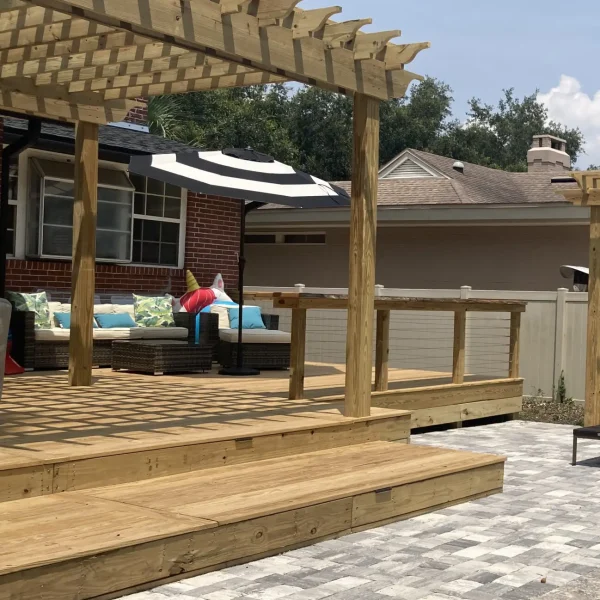
Wood also integrates beautifully with other outdoor living spaces like deck installations and paver patios.
Vinyl Fence Aesthetics
Modern vinyl fencing offers more variety than earlier generations, including:
- Wood-grain textures that approximate real wood
- Various colors beyond white (tan, gray, beige)
- Multiple style options (privacy, picket, semi-privacy)
- Decorative lattice and post caps
Vinyl works particularly well with contemporary and coastal-style homes. It also complements concrete installations and modern hardscaping elements.
Installation Considerations
Proper installation dramatically affects performance for both fence types.
Wood Fence Installation
Professional fence installers set posts in concrete, typically 2-3 feet deep in Jacksonville’s sandy soils. Posts should be pressure-treated and rated for ground contact.
Key installation factors:
- Proper post spacing (typically 6-8 feet)
- Posts set below frost line (not a major concern in Jacksonville)
- Adequate drainage around posts
- Galvanized or stainless hardware to prevent rust staining
Vinyl Fence Installation
Vinyl installation requires more precision than wood because panels are pre-fabricated to specific dimensions.
Critical considerations:
- Posts must be perfectly plumb and aligned
- Concrete footings provide essential stability
- Adequate spacing must account for thermal expansion
- Reinforced posts at gate locations and corners
HOA and Neighborhood Considerations
Many Jacksonville neighborhoods have specific fencing requirements that affect your material choice.
Common HOA Restrictions
Some homeowners associations specify:
- Allowed fence heights (typically 4-6 feet for front yards, 6-8 feet for backyards)
- Permitted colors (often limiting vinyl to white or neutral tones)
- Style requirements (privacy vs. open picket)
- Material restrictions (some HOAs prohibit certain fence types)
Always review your HOA guidelines before planning fence installation. Coastal Outdoor Construction can help navigate these requirements during your consultation.
Environmental and Sustainability Factors
Environmental impact increasingly influences homeowner decisions.
Wood Fencing Environmental Considerations
- Renewable resource when sourced from managed forests
- Biodegradable at end of life
- Chemical treatments raise environmental concerns for some homeowners
- Can be repurposed for other projects when replaced
Vinyl Fencing Environmental Considerations
- Made from petroleum-based products (non-renewable resource)
- Not biodegradable, but can be recycled
- Long lifespan means less frequent replacement
- Manufacturing process has higher environmental impact than wood processing
Making Your Decision: Which Fence Is Right for You?
Your ideal fencing choice depends on multiple factors beyond just cost and appearance.
Choose Wood Fencing If You:
- Prefer natural wood appearance and warmth
- Have a limited initial budget but can commit to ongoing maintenance
- Want customization options for stain colors and styles
- Plan to integrate fencing with deck construction or other wood elements
- Live in a traditional neighborhood where wood fencing is the norm
- Enjoy DIY maintenance projects
Choose Vinyl Fencing If You:
- Want minimal ongoing maintenance requirements
- Can invest more initially for long-term savings
- Live in an area with high termite pressure
- Prefer clean, consistent appearance without refinishing
- Want maximum longevity with minimal effort
- Have outdoor living spaces that benefit from low-maintenance surroundings
Hybrid Approaches
Some Jacksonville homeowners find middle ground by combining both materials strategically.
Common Hybrid Strategies:
- Vinyl privacy fencing for main perimeter with decorative wood accent sections
- Wood fencing in highly visible front yard with vinyl in backyard
- Vinyl fence with wood pergola or deck integration
Working with Professional Fence Installers
Quality installation matters as much as material choice for fence longevity and performance.
Coastal Outdoor Construction provides expert fence installation throughout Jacksonville and surrounding areas. Our team helps you navigate material choices, HOA requirements, and design options to create the perfect fencing solution for your property.
We handle all aspects of fence projects, from initial consultation and permitting through professional installation and post-project inspection, ensuring your fence performs beautifully for decades.
Final Thoughts on Wood vs. Vinyl Fencing
Both wood and vinyl fencing offer valid solutions for Jacksonville homeowners, but they serve different priorities.
Wood fencing provides natural beauty and lower initial costs but demands ongoing maintenance investment. Vinyl fencing costs more upfront but delivers decades of virtually maintenance-free performance and superior long-term value.
Consider your budget, time availability for maintenance, aesthetic preferences, and how long you plan to remain in your home when making this decision. For most Jacksonville homeowners, the minimal maintenance and long-term cost savings make vinyl fencing the more practical choice, while those valuing natural materials and traditional appearance often prefer wood despite the higher maintenance demands.
Ready to discuss fencing options for your Jacksonville property? Contact Coastal Outdoor Construction at (904) 664-6364 for a free consultation. We’ll assess your property, review your needs and preferences, and provide detailed quotes for both wood and vinyl options. Visit our gallery to see examples of both fence types we’ve installed throughout Northeast Florida, and learn more about our commitment to quality outdoor construction.

Written By:
Coastal Outdoor Construction
Let's Talk About Your Decking Project
Enter your details below to lock in your $500 lighting credit.